Civic engagement chatbot
Testing whether a Messenger chatbot could help Cambodians connect with their local government.

The idea
Facebook's reach in Cambodia is so complete that a lot of people here don't distinguish between Facebook and the internet. After eight years of watching that play out, we had an assumption worth testing: if citizens already live in Messenger, could a chatbot inside Messenger help them deal with their commune office? Find out what a birth certificate costs, what the process is, who to talk to.
Research first
Before designing anything, we ran field tests across the communes we'd be working in: commune officials, youth, men, women, a range of ages. Two groups stood out as the best place to start. High school students, and young citizens aged 18 to 35, a demographic that holds more than 70% of Cambodia's population. They had smartphones with data and they already lived in Messenger.
 A research session in the communes: officials, youth, men and women across age groups.
The officials taught us something too. Nine out of ten sub-national government officials we worked with had a smartphone with data, and their top apps were Facebook, Messenger and WhatsApp. But they preferred WhatsApp for their own communication, because they saw its encryption as safer.
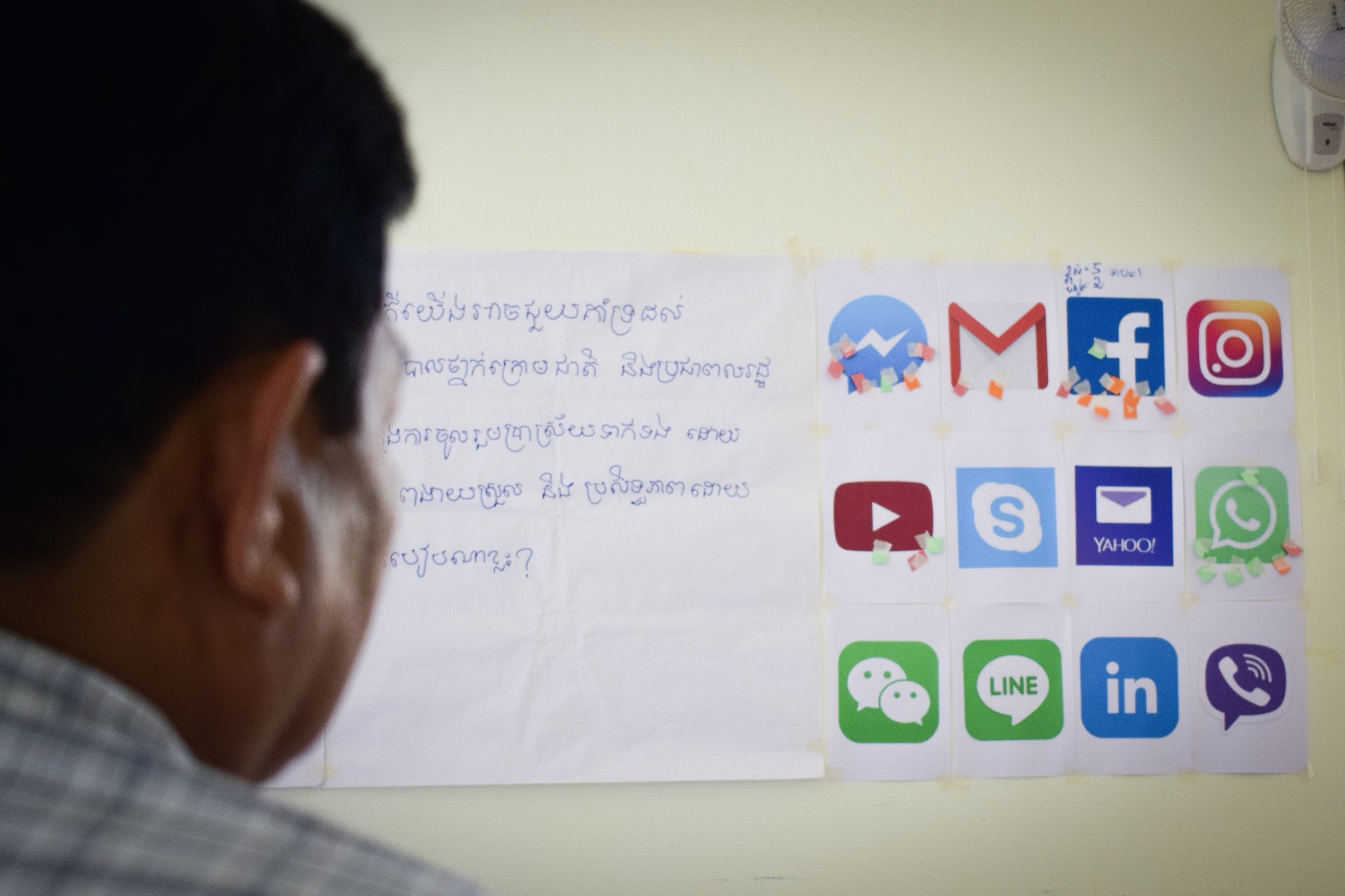 The app exercise: participants mark the apps they actually use.
Designing the bot
We mapped the services with Pact and settled on the three that mattered most in the communes: national ID cards, birth certificates and marriage certificates, with the price of each listed. For the platform we looked hard at open-source options, then chose Chatfuel, because a Pact team member with no coding knowledge could update the bot as services changed. A tool a partner can't maintain is a tool that dies when the project ends.
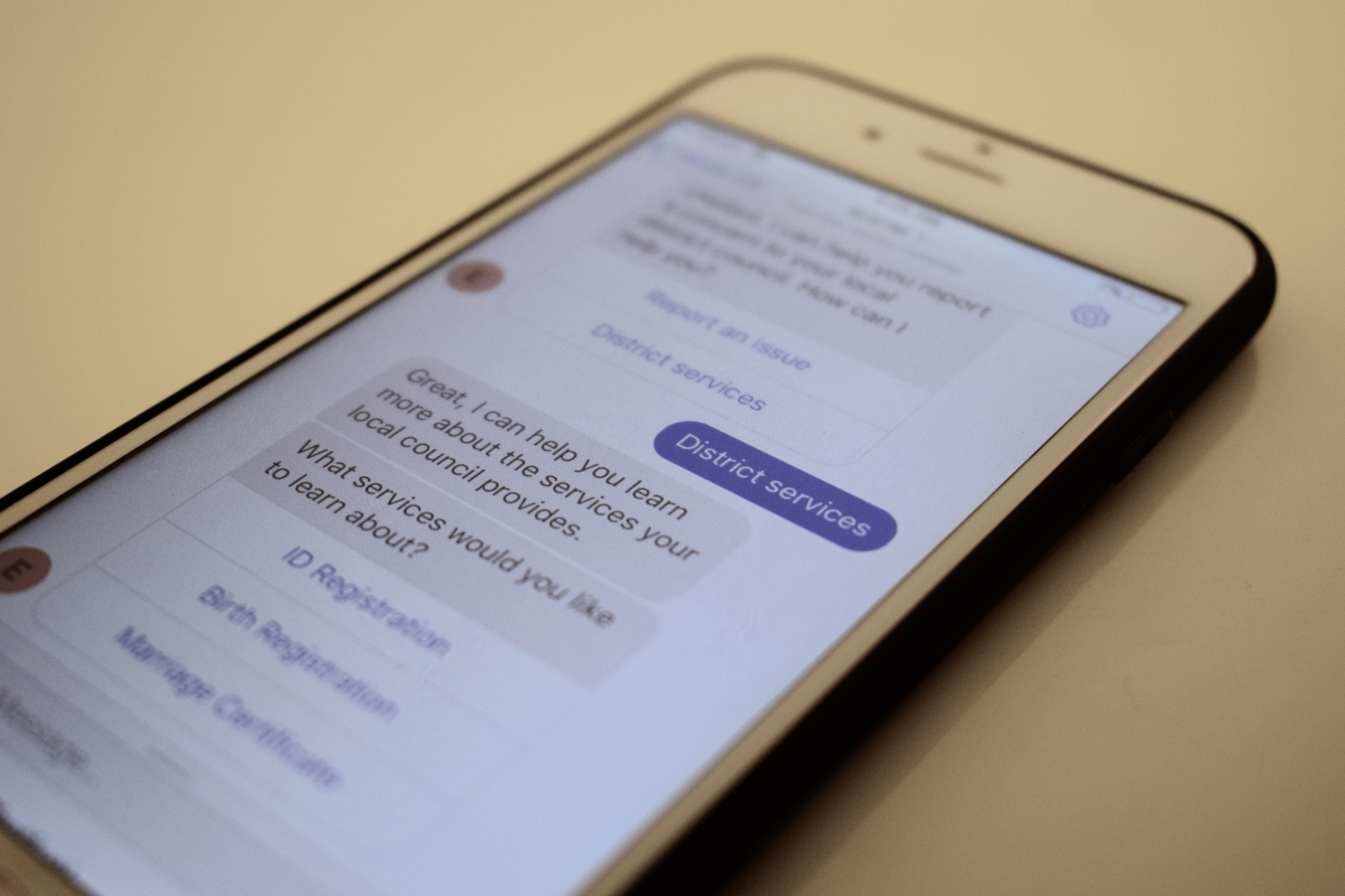 An early build of the service flow: the three services the communes asked about most.
The plan included a story-based game to draw users in, but as we mapped the decision tree we realized how complex it would have to be to compete with what Cambodian youth already play. We dropped it and focused on getting the service information right. To keep the bot from feeling like paperwork, we worked with local artists on a character that felt like an older brother, someone safe to ask an awkward question.
What we learned
In testing, young users just started typing, the way they'd message a friend. Almost no confusion over the interface, which meant we could actually see how the service design performed. It showed that a chatbot could work in Khmer text in a way people found natural. As far as we knew, that was a first for Cambodia.
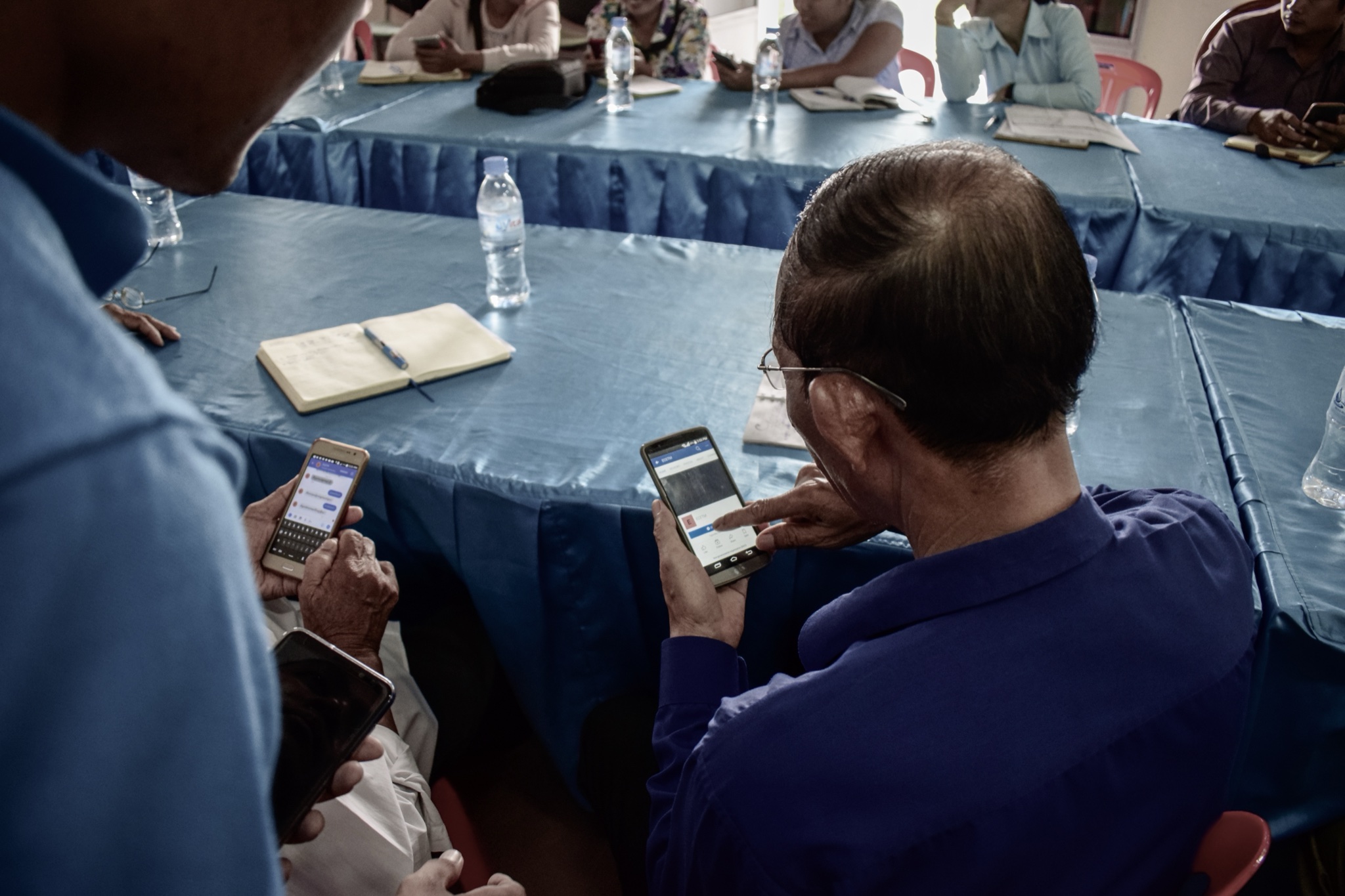 Commune officials trying the bot on their own phones during testing.
A pilot is a pilot. The content design was basic, the testing skewed toward tech-comfortable users, and platforms like Telegram deserve a look. The approach got its next test a year later, with Jomneh, a chatbot for young women entrepreneurs. But the assumption held: meet people in the tool they already use, and the technology mostly gets out of the way.
Working on something like this?
Research, design or a good question. All welcome.