Why Stories Matter: Telling the Stories of Aid That People Don't See
The school bell rang. Except there was no bell. It was the shuffle of wooden planks under small feet, doors creaking open, and the high laughter of kids spilling out into the late afternoon sun. They ran the way kids run anywhere, desperate to be free of lessons, their voices carrying out over the water.
At first I just saw the excitement, the kind that comes when the last bell of the day finally lets everyone go. Then I noticed what was missing. No sidewalks. No bikes leaned against the schoolhouse. No parents waiting at the edge of a dusty road. The kids were sprinting toward the water.
Small wooden canoes bobbed along the dock, tied loosely, like they belonged to the school as much as the classroom did. Some kids hopped into boats where a family member was already sitting, ready to row. Others jumped into their own and picked up the paddles like they'd done it a thousand times. Then the whole lake filled with movement, little boats scattering in every direction, paddles cutting the still water as the kids headed home.
I sat in my own boat and watched. It was early in my time in Cambodia, and I remember thinking, very clearly: this work matters. This is what I want to do for the rest of my life. The feeling stuck.
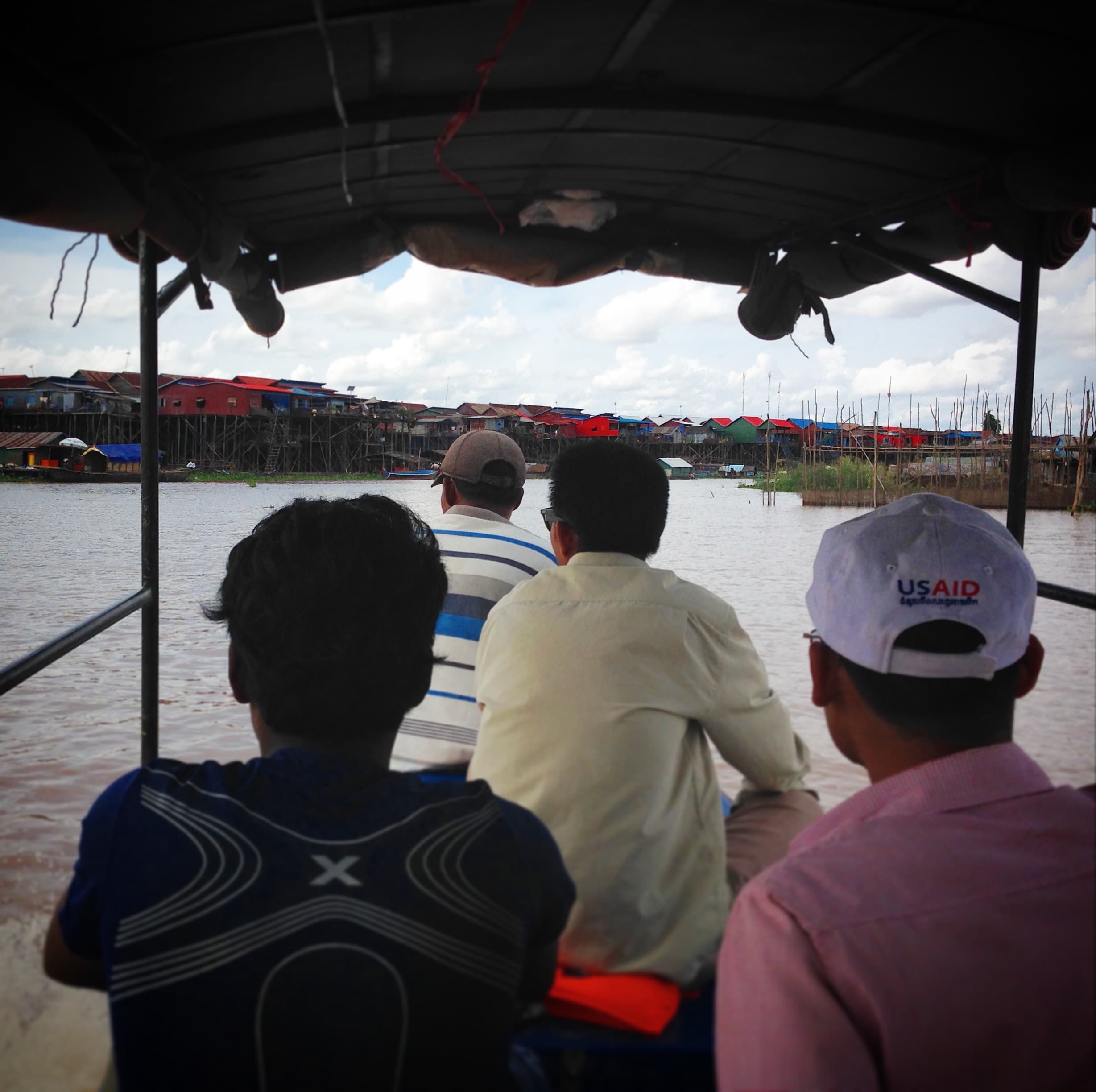
That trip to the floating villages was part of a USAID-funded project. We were helping a local health clinic digitize its patient records. Simple enough, but it mattered. The paper records were vulnerable to storms, water damage, the slow wear of time, and we were moving them to a secure cloud-based system so families in a remote village could keep getting decent care.
It's one project. There are thousands like it that USAID funds across Southeast Asia and the rest of the world.
Since the stop-work order I keep coming back to that afternoon. Not just the work, but how we talk about it, or don't. I've spent more than a decade heads-down doing this work and almost no time telling anyone what it actually looks like. Our programs in Cambodia are sitting in limbo now, funding frozen, decisions made by people who have never seen the lake. And it's made me realize how badly I've failed at telling these stories.
Most people in the US have no idea what USAID does. They don't see the kids paddling home from school. They don't see the health worker who finally has the tools to do her job. They don't see how a small investment in technology and training ripples outward, holding a community together, making things run a little better, building a real relationship between Cambodia and the United States.
So when a politician stands up and says foreign aid is fraud, or waste, that story sticks. Not because it's true. Because most Americans don't have another story to hold against it. No face, no place, no single concrete example of what the money actually does. And that's on me. I haven't given the people back home anything real to picture.
The aid I work with was never charity. It's relationships. It's bringing American knowledge and tools into places that can use them to build their own future. It's training people, opening up opportunity, and yes, soft power too, keeping the US in the conversation in a part of the world that matters. But those are abstractions. They mean nothing until you put a person in front of them.
So I'm going to talk about this work more. I'm going to tell more stories from the field. If we want people to understand why this matters, if we want to protect the programs that are actually changing lives, we have to be willing to show them what it looks like.
Next time someone asks me what USAID does, I'm not reaching for the policy language. I'm going to tell them about the kids rowing home from school across the Tonle Sap. Those kids are the whole thing.