Designing for the device they actually have
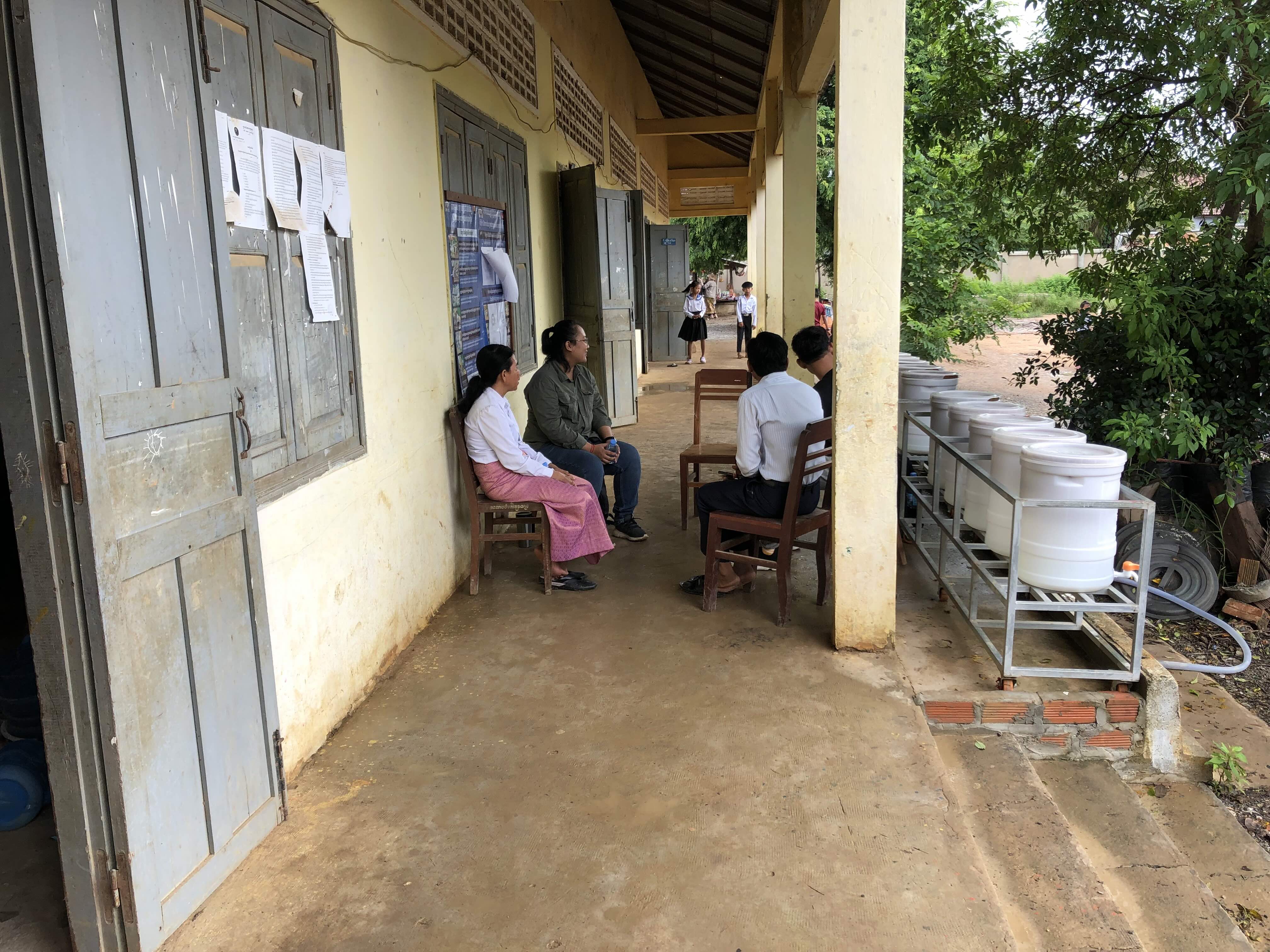
I spent a few weeks in late 2022 sitting across from teachers in Banteay Meanchey, asking them about their phones. Fourteen educators. A couple of principals. Two officers from the local Department of Education. A clipboard. A survey about app stores and data plans and which apps they actually used.
It was a UX research module for my masters at Falmouth. It ended up being a useful reminder of how badly I'd been designing.
All fourteen owned a smartphone. Three on iPhone. The rest on Android, mostly Oppo and Samsung. That part I expected. The rest I didn't. Three of them didn't know how to use a computer at all. Eight were somewhat comfortable. Only three were comfortable enough to call professional. Seventy percent were on phones more than two years old. They had data plans. They could find the app store. They just didn't go there more than once a month. None of them had ever paid for an app. The four most common categories on their phones were video, banking, social media and photos. That was the whole digital surface their professional lives ran on.
I'd been sketching the eLearning prototype on my MacBook. Wide screens. Modern Android patterns. The same iconography I'd use for any client back at Glean. Material Design components. Hamburger menus. Tab bars with little glyphs. The stuff anyone trained in the developed-world UX canon reaches for without thinking.
None of it made sense once I sat with the data.
It wasn't a Banteay Meanchey fluke either. The market research told the same story. ADA had eighty percent of Cambodian smartphone users on Android. Seventy-seven percent on devices more than two years old. The phones the teachers had weren't outliers. They were the country.
The first thing that had to change was the canvas. 360x640. That's what most of them were holding. Not 390x844. Not 412x915. The older Android footprint you stop seeing once you let Figma default to the latest Pixel. If you design at 1440 on your laptop and let it scale down, you don't notice what you've lost. If you set the canvas to 360x640 and start there, you notice immediately.
Then the buttons. The first version had compact controls. Tap targets that looked elegant in a portfolio screenshot and were almost certainly too small for a first-time app user holding a five-year-old phone with a cracked screen. I made them bigger. Then bigger again.
Then the icons. This is the one I had to be talked out of. I love a good icon system. The literature talked me out of it. There's a line in a van Biljon and Renaud paper on phone design in developing-country contexts that stuck: design conventions from the developed world rely on assumptions about how users and developers communicate, and those assumptions don't necessarily hold. In Cambodia they often don't hold at all. A hamburger isn't a menu. A gear isn't settings. The mental model isn't there, because the apps that taught the rest of us those conventions weren't where these teachers learned to use their phones. Facebook taught them. YouTube taught them. So we cut the icons down to almost nothing and used words instead. Plain Khmer words. Wider buttons to fit them.
Then the video. The focus group in Phnom Penh, four teachers with higher capacity than the rural sample, told me something I should have known. They didn't want widescreen video. They wanted what Facebook Stories had already taught them to want. Vertical. Full screen. Short. So the player went vertical. It looked weird in the Figma frame. It looked right on the phone.
None of this is genius. Most of it is the obvious thing once you spend a few hours with the people you're designing for. The trouble is that the obvious thing isn't obvious from a studio. It's only obvious from across a table in Banteay Meanchey, watching someone tap on a button and realising the button is too small.
What I never quite got to do is what I should have. The prototype never made it back into a teacher's hand. It stopped at Figma. Clickable frames in two languages. No teacher in Banteay Meanchey ever sat with the thing on her own phone and told me what was still wrong. The findings shaped the artifact. The artifact never tested the findings. That gap is still there.
The prototype sits in a Figma file. It never shipped. Three years on I think the design choices still hold up, but that isn't really the point of the project for me anymore. The point is that fourteen teachers and a couple of focus groups changed almost everything about the artifact I'd planned to build. A small amount of asking against a large amount of redesigning. That ratio seems to me to be the actual job. I'm not sure I would have learned it any other way.
Based on research conducted for UXO740: User Experience Research, MA User Experience Design, Falmouth University (November 2022).
References
ADA. 2021. Mobile Device Insights Report. ADA.
van Biljon, J. and Renaud, K. 2016. "Validating Mobile Phone Design Guidelines: Focusing on the Elderly in a Developing Country." Proceedings of the Annual Conference of the South African Institute of Computer Scientists and Information Technologists, 1–10.