Youth for Change usability
Usability research for World Vision's youth leadership curriculum, with a finding we didn't expect.
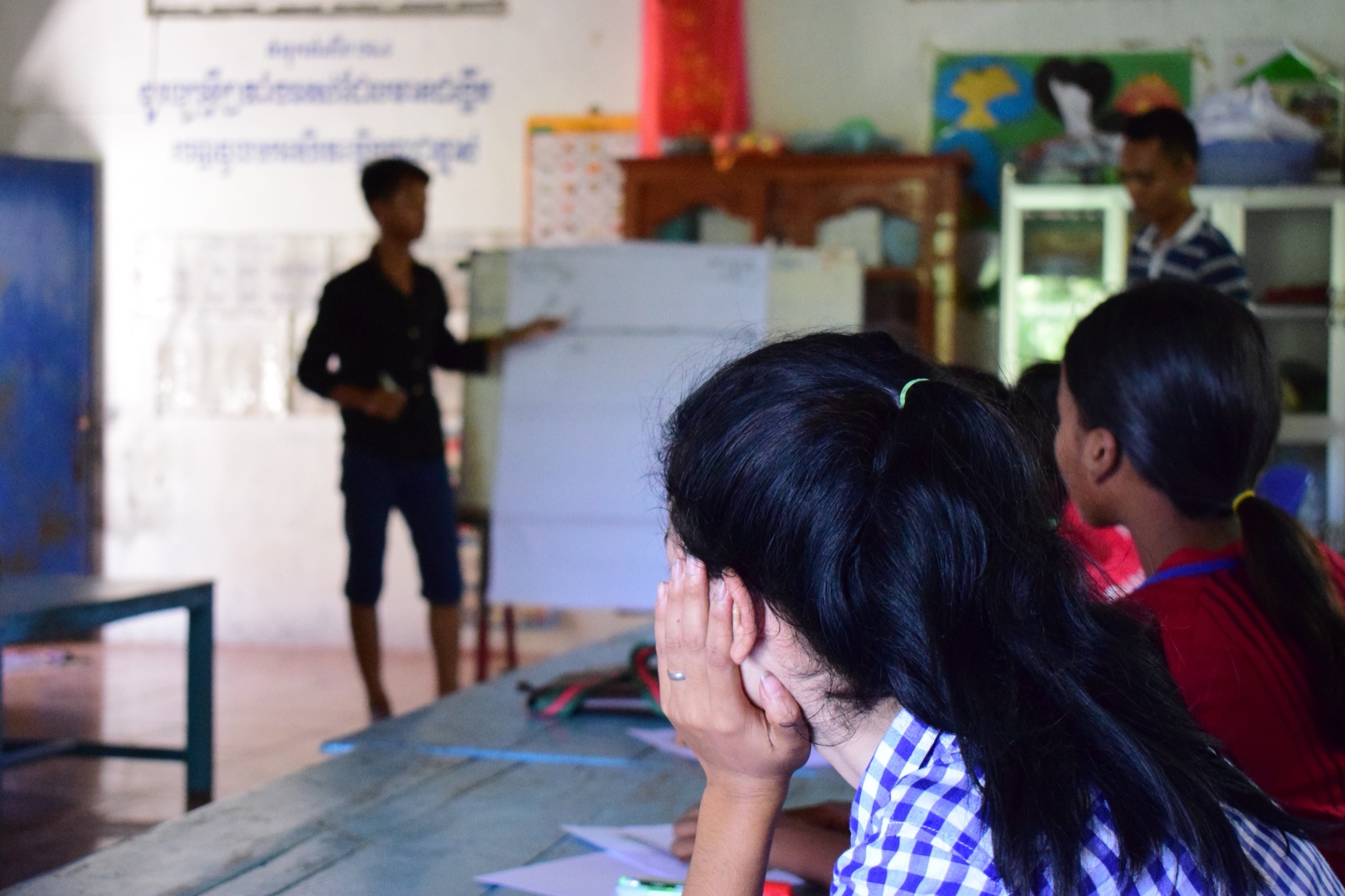
The setup
World Vision's Youth for Change curriculum is a multi-year program of activities and trainings, delivered by young Cambodians with staff support. The curriculum was already designed. Our job was to work out how to make it more usable for the youth club leaders running it week to week.
Testing our assumption
We set up three usability field visits: watching leaders deliver sessions, hearing their reflections, then co-facilitating sessions built on four different templates so we could isolate specific problems and test fixes. Our assumption going in was that leaders needed help with the technical side of delivering trainings.
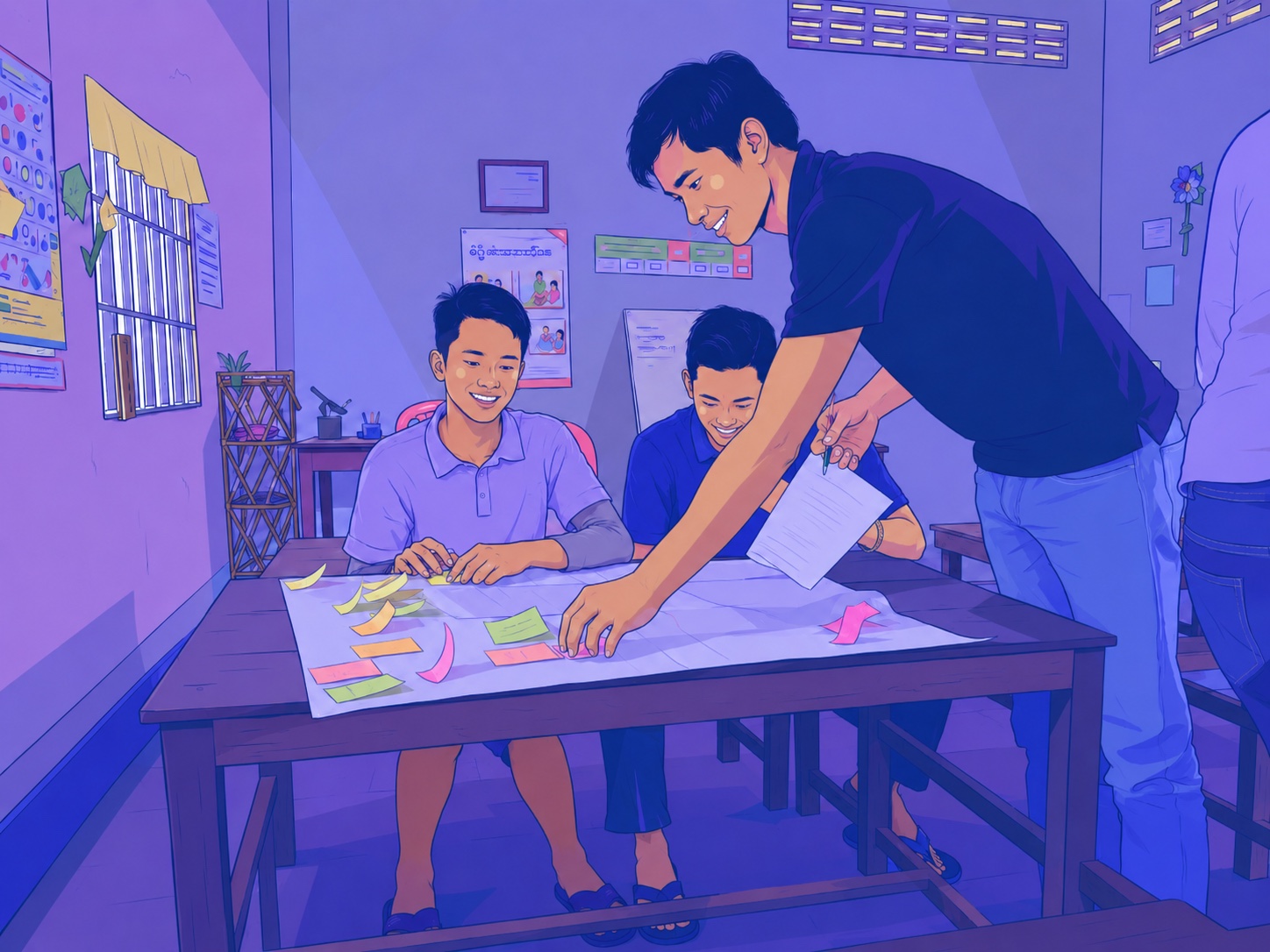 Working through one of the four session templates with youth leaders in Takeo. Illustrated from a field photograph to protect participants' identities.
The first field visit took that assumption apart. The leaders were comfortable running sessions and knew the curriculum well. Their real struggle was adapting it: taking a large, standardized curriculum and making it make sense for their particular community and their particular group.
Changing course
For the final two visits we kept the same approach but shifted the focus from curriculum content to the soft skills leaders needed to solve problems live in a session.
What came out was a set of habits and exercises built around those skills: listening to people, debriefing well, adapting teaching methods, working as a team, and reflecting with World Vision staff week by week so each leader's practice kept improving. Credit to World Vision for backing the pivot; not every client lets the research change the project.
We don't always get to talk to users before decisions are made. This time we did, and the thing we built was for a need that actually existed. The young leaders knew their challenges better than we did. They usually do.
Working on something like this?
Research, design or a good question. All welcome.