Accountability research with children in Prey Veng
Field research, usability testing and prototype design for child-centric social accountability in Prey Veng province.
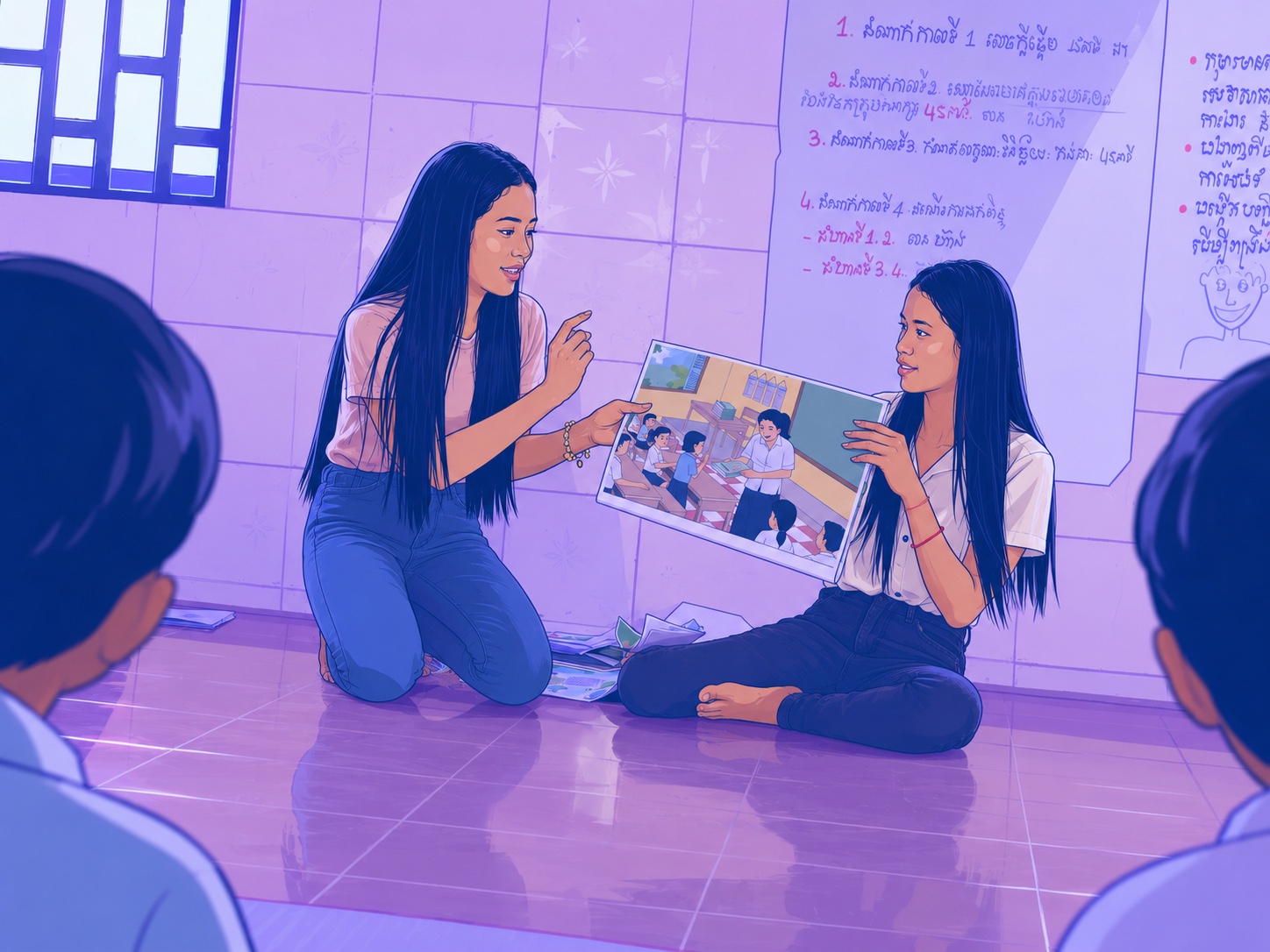
In late 2018 I was in Prey Veng province, testing session plans I'd redesigned for Save the Children. The sessions were about government services: health centers, schools, commune offices, and how citizens hold those services accountable. The participants were kids.
The trained adult facilitators, community volunteers called Commune Accountability Facilitators, kept sliding into classroom mode. Standing at the front, teaching. When a child raised a question, it got a quick answer and the session moved on. The children's club leaders, teenagers between 14 and 17 leading clubs of kids as young as seven, ran the same material as a conversation. Questions got picked up instead of closed down. Nobody trained them to do that.
Child-friendly documentation only works in a child-friendly environment. You can't fix the front of the room on paper.
The project
Cambodia has a government-led framework for social accountability called I-SAF, the Implementation of the Social Accountability Framework. Citizens review how their local services are performing, score them, and feed that into commune investment plans. Save the Children's contribution is Child-Centric Social Accountability (CCSA), which makes sure children get a real seat in that process. The decisions being made about schools and health centers will affect them longer than anyone else in the room.
Save the Children brought Glean in to update the four core CCSA documents: session plans for Information for Citizens (I4C), the Community Scorecard (CSC), the Joint Accountability Action Planning Committee (JAAPC), and a general session on why child participation matters at all.
The problem was that the documents read like they were written for NGO staff, because they were. Sessions ran up to 180 minutes, held once a year, on school holidays. The I4C posters were too small to see in trainings of 50 participants. The scorecard process stalled when it came time to prioritize actions, and brainstorming sessions rarely drew creative solutions out of the participants themselves. The users reported the documents were hard to understand and hard to use.
What would happen if we asked children to use these documents tomorrow, in their current format?
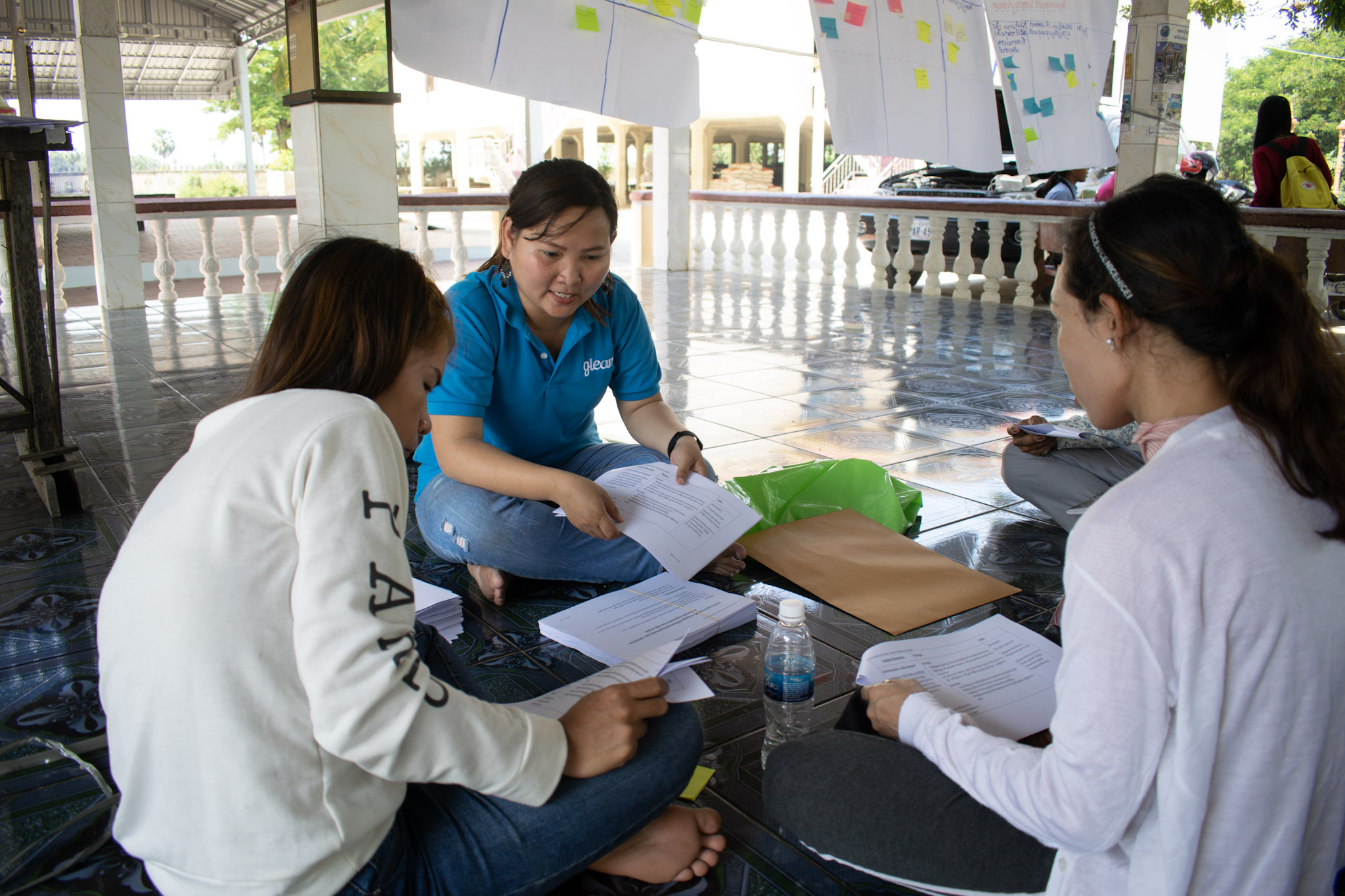 Working through the redesigned session plans with Commune Accountability Facilitators.
What we made
The work started with a stakeholder interview at the Save the Children country office, carrying field feedback from WOMEN, their partner organization in Prey Veng. Then a full documentation review, looking at every document across three dimensions: wording, format and process. The wording had actually been refined over years in a child-led process. The format and the process were where things broke down.
Children should be able to engage in social accountability as children. A seven-year-old should not need an NGO's view of logframes and outcomes to participate in a meeting about their own school.
From there, three deliverables:
The updated session plans. Four documents rewritten around how the sessions actually run, with facilitation tips built in: welcome what kids say, leave silences for them to speak into, don't rush past the slow starters.
The image pack. A set of illustrated cards covering the three service areas I4C assesses: health centers, schools and commune services, six images per area. Each card puts a full-color illustration facing the participants and a script on the back for the facilitator: a short READ section describing the scene, a DISCUSS section with open questions ("What is happening in this image?" "What would you like to change to make it work better?"), and the service standard the image represents. The format came from an older child-rights poster set that facilitators already knew how to use. We borrowed an interaction pattern that was already working in these communities.
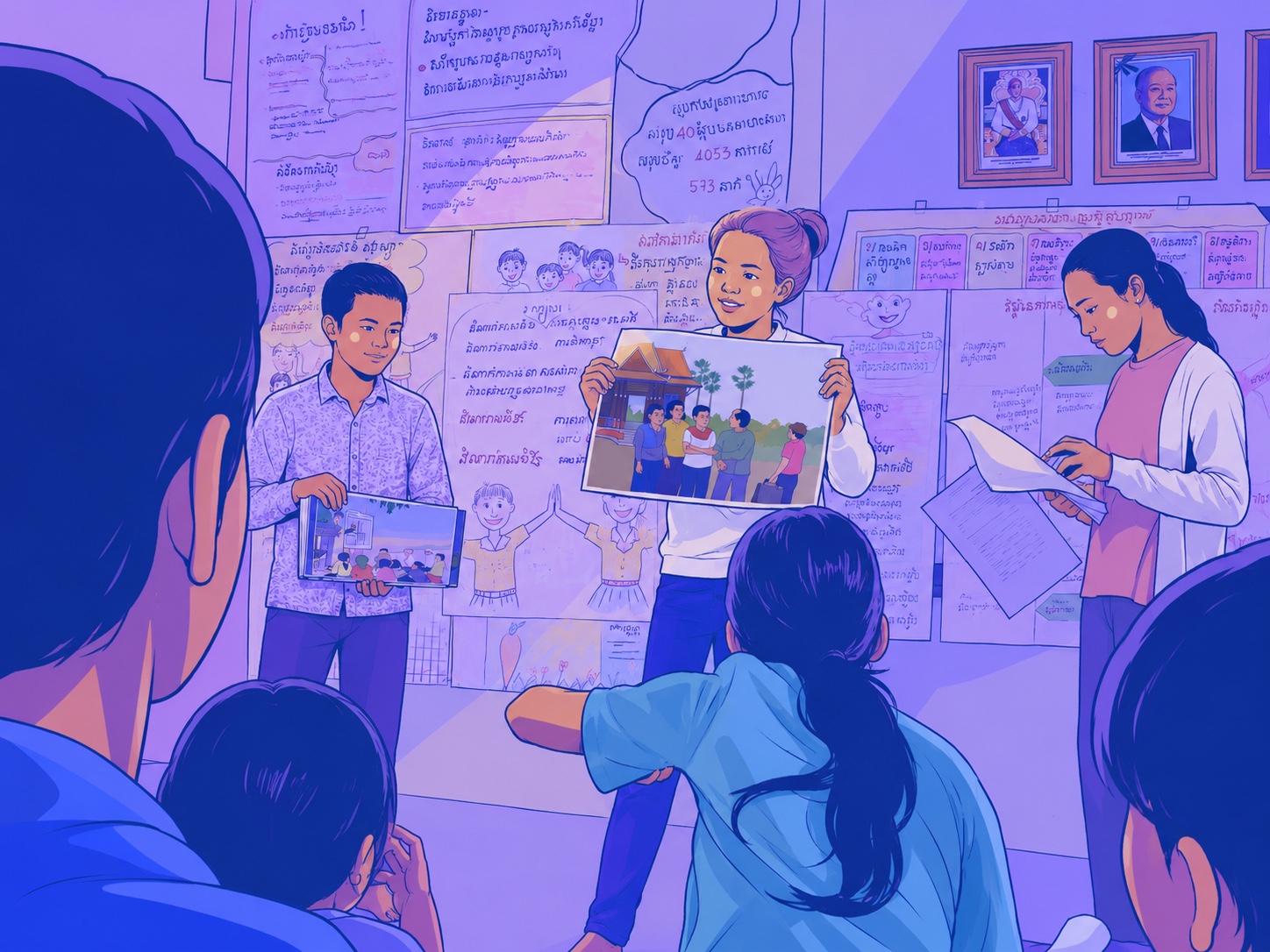 The two-sided cards in use: illustration facing the kids, facilitator script on the back. Illustrated from a field photograph to protect participants' identities.
The storybook prototype. A narrative walkthrough of the whole journey, from "what is social accountability?" through the scorecard to a child representative speaking up at a JAAPC meeting, written so a club leader could read it with children as a story.
Then we took all of it to Prey Veng, tested it over two days of live sessions with children's clubs, and revised based on what we saw.
What the testing taught me
The kids stayed engaged, even through the long sessions. The club leaders and the adult facilitators were capable and committed, and the materials held up in their hands.
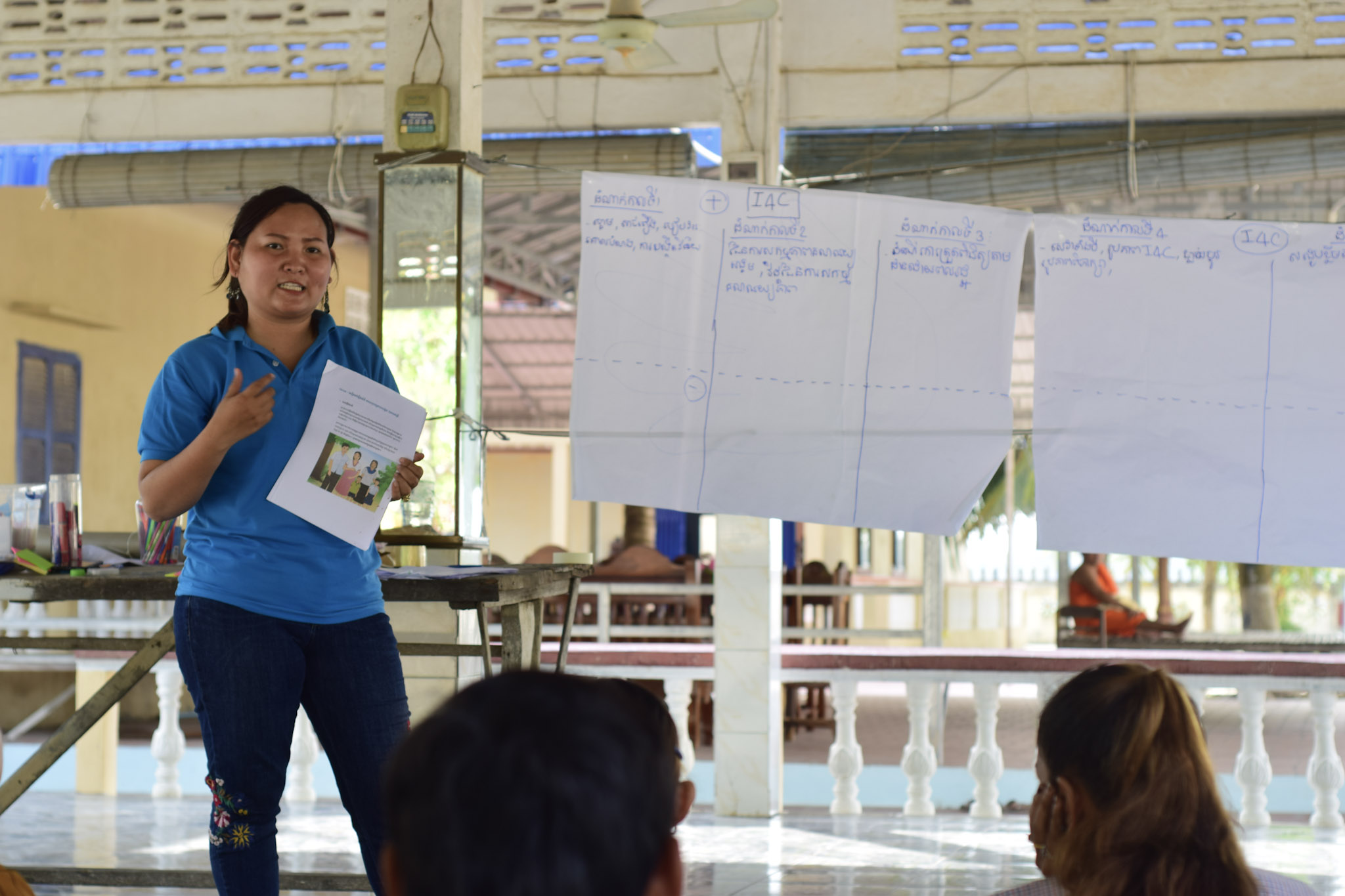 The front of the room: I4C training with the flipcharts that replaced the too-small posters.
The facilitation was the problem. The adult CAFs defaulted to the formal teaching style they knew, and the child-friendly activities got skipped. My final report recommended annual refresher training in child-friendly facilitation, and a restructure of the whole approach: lighter, shorter sessions spread across the year instead of a once-a-year three-hour marathon that everyone struggled to remember.
The timeline allowed one round of testing. We delivered on time, and the insights were clear. But real co-design, multiple rounds, tools iterated in the children's hands, needs more than one trip to the province.
The users were children, so the gaps were easy to see. A document either works for a nine-year-old or it doesn't. Adults are better at pretending.
Working on something like this?
Research, design or a good question. All welcome.