Report tracking for Neverthirst
An internal report-tracking platform for the clean-water nonprofit Neverthirst, integrating Salesforce and mWater to auto-generate donor reports.
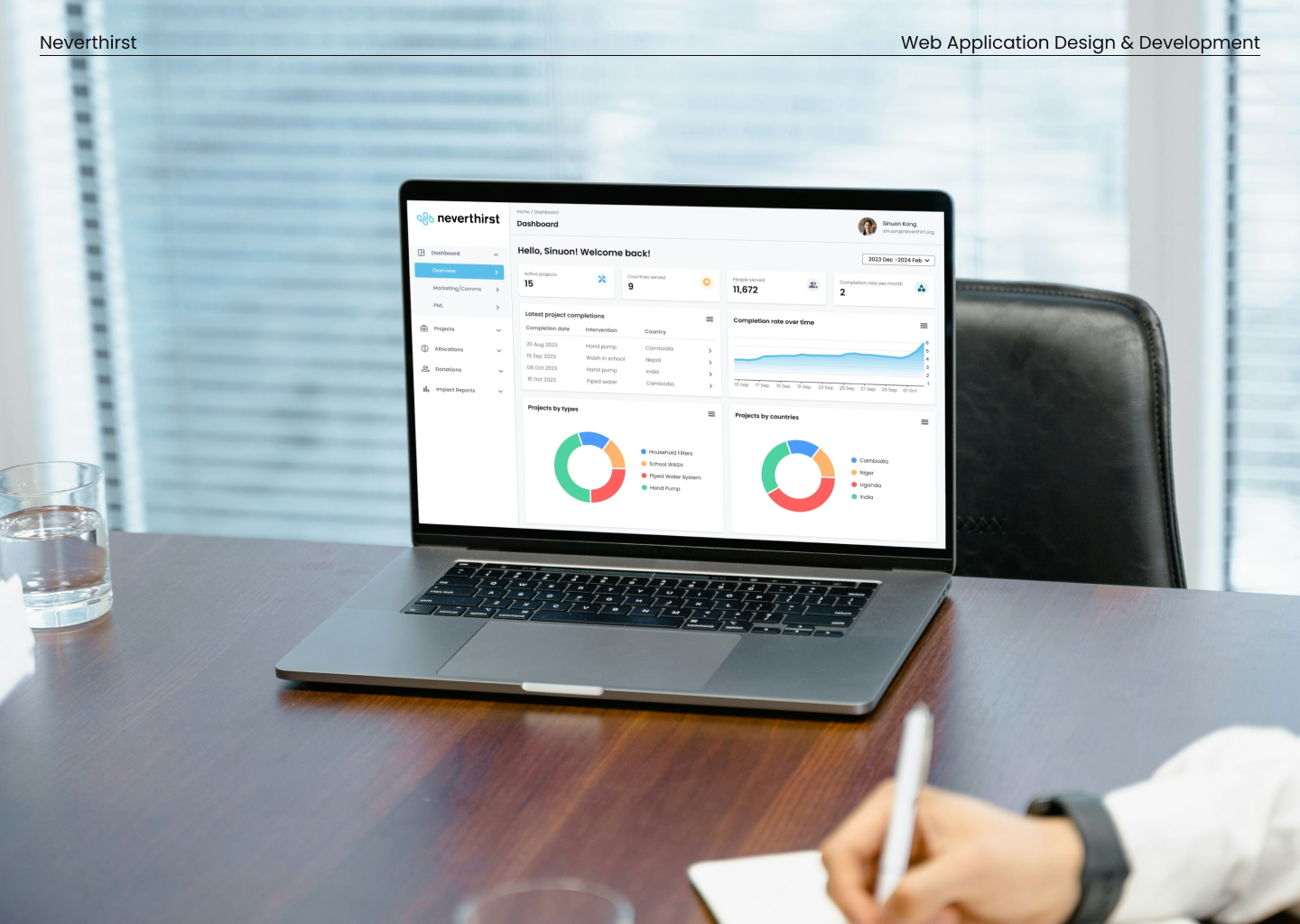
Before we built anything, I flew to Alabama and started asking questions.
Neverthirst is a clean-water nonprofit based in the United States that builds wells and water systems in communities around the world. Our work with them started small, in 2021, as a process-mapping exercise to understand at a high level how they put together the reports they send to their donors. That first look turned into a much longer engagement. I spent eight months in workshops with their team, mapping the entire reporting workflow of their home office, everyone who touched a donor report from start to finish.
Ten tools and a lot of copying
When we mapped it out, Neverthirst was running their donor reporting across about ten different tools and service providers. Data lived in one place, photos in another, approvals somewhere else, and pulling a single donor report together meant moving all of it by hand.
So we looked for where the process could be tightened. Where an automation could safely take over, we designed one. Where a human approval genuinely needed to happen, we designed a clear workflow for it. And all of it would live in one central place instead of ten.
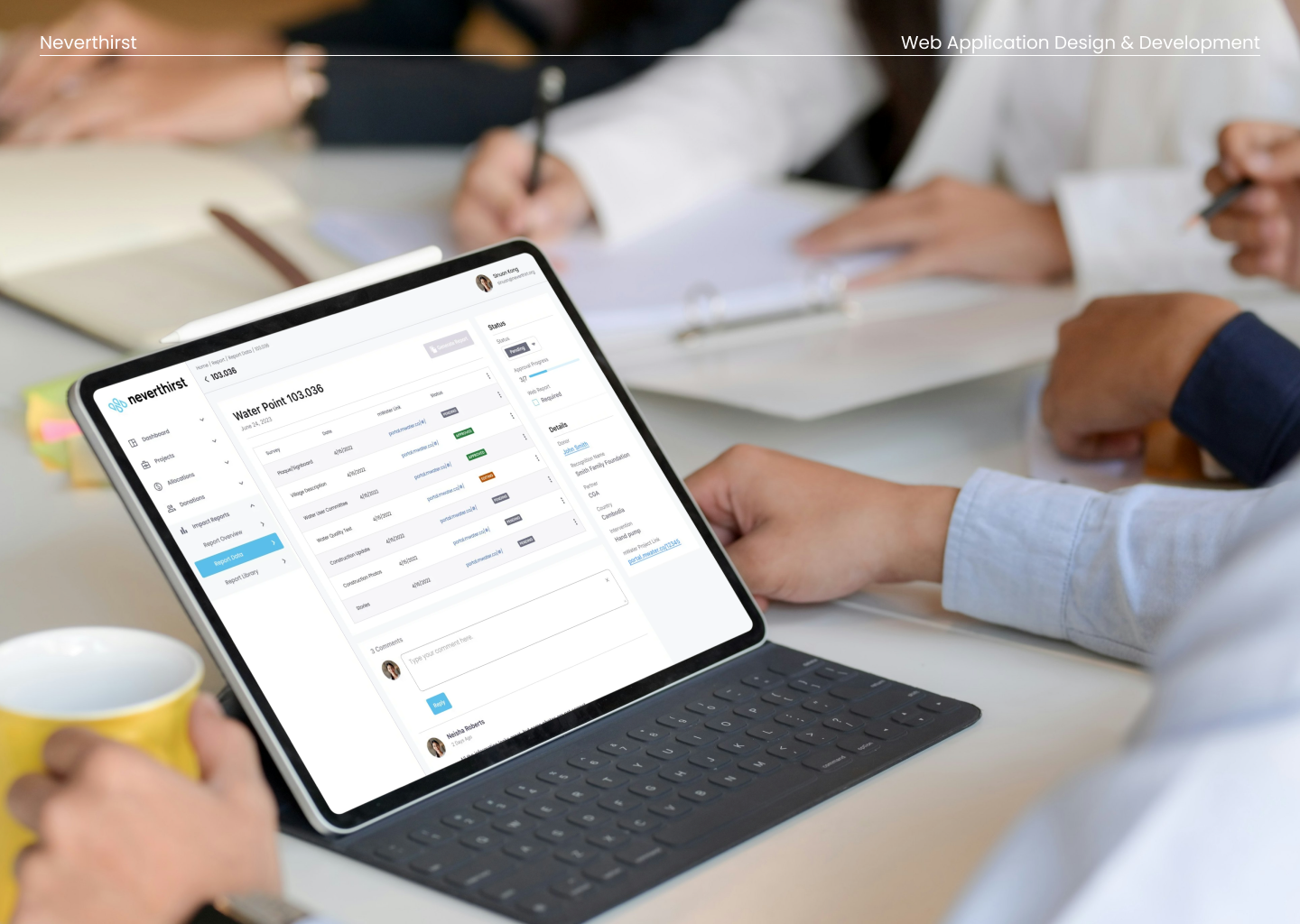 Every water point carried its own report, with a status on each step and an approval workflow before anything went out.
What we built
The result was a report-tracking platform, built on Liferay and integrated into the systems Neverthirst already relied on. We wrote custom integrations into their Salesforce and into mWater, the tool they use to track the wells they build. Data from both flowed into the platform automatically, and from there Neverthirst could generate a donor report as each milestone was met: from the moment a donor engaged, through the well being built, through the water quality test being approved, all the way to a finished report.
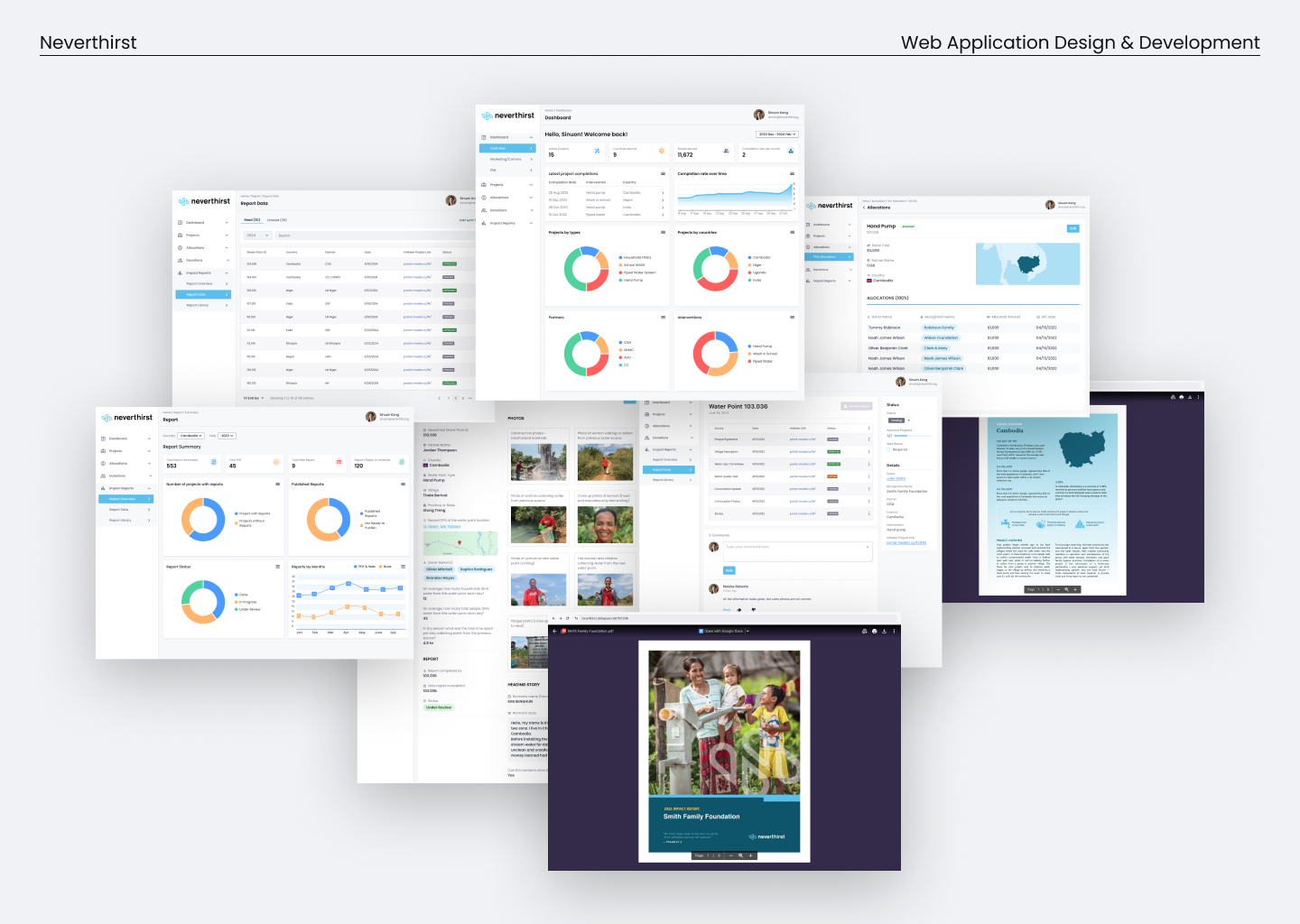 From live data to a finished document: the platform assembled the donor report as the project moved from funded to built to tested.
Building the whole platform and the ecosystem around it took a couple of years. The visible payoff is a report that mostly fills itself in. The real work was the eight months before any of it, sitting with the people who did the job and learning how the job was actually done. A tool built on a guess about the workflow would have become the eleventh thing they had to reconcile. This one replaced the other ten.
Working on something like this?
Research, design or a good question. All welcome.