A mining early-warning system, delivered by SMS
A mining early-warning platform for Equitable Cambodia that turns public concession data into SMS alerts for local communities, built with Transparency International on USAID funding.

When a mining concession is granted in Cambodia, the government publishes it. This project set out to carry that information the rest of the way, to the communities living near the concessions.
Equitable Cambodia monitors mining activity in the areas where they work. Together with them we built a mining early warning system: a platform that gathers the publicly released concession information into one place, and then pushes it back out to the communities it affects.
Understanding how it actually works
Before designing anything, we sat with Equitable Cambodia to map the user journeys and personas for the people who would use this, both in their office and in the communities they serve. We worked with their technical team to understand how mining concessions are actually granted and how you would track them reliably. Only then did we design the website and the reporting tool around what we had learned.
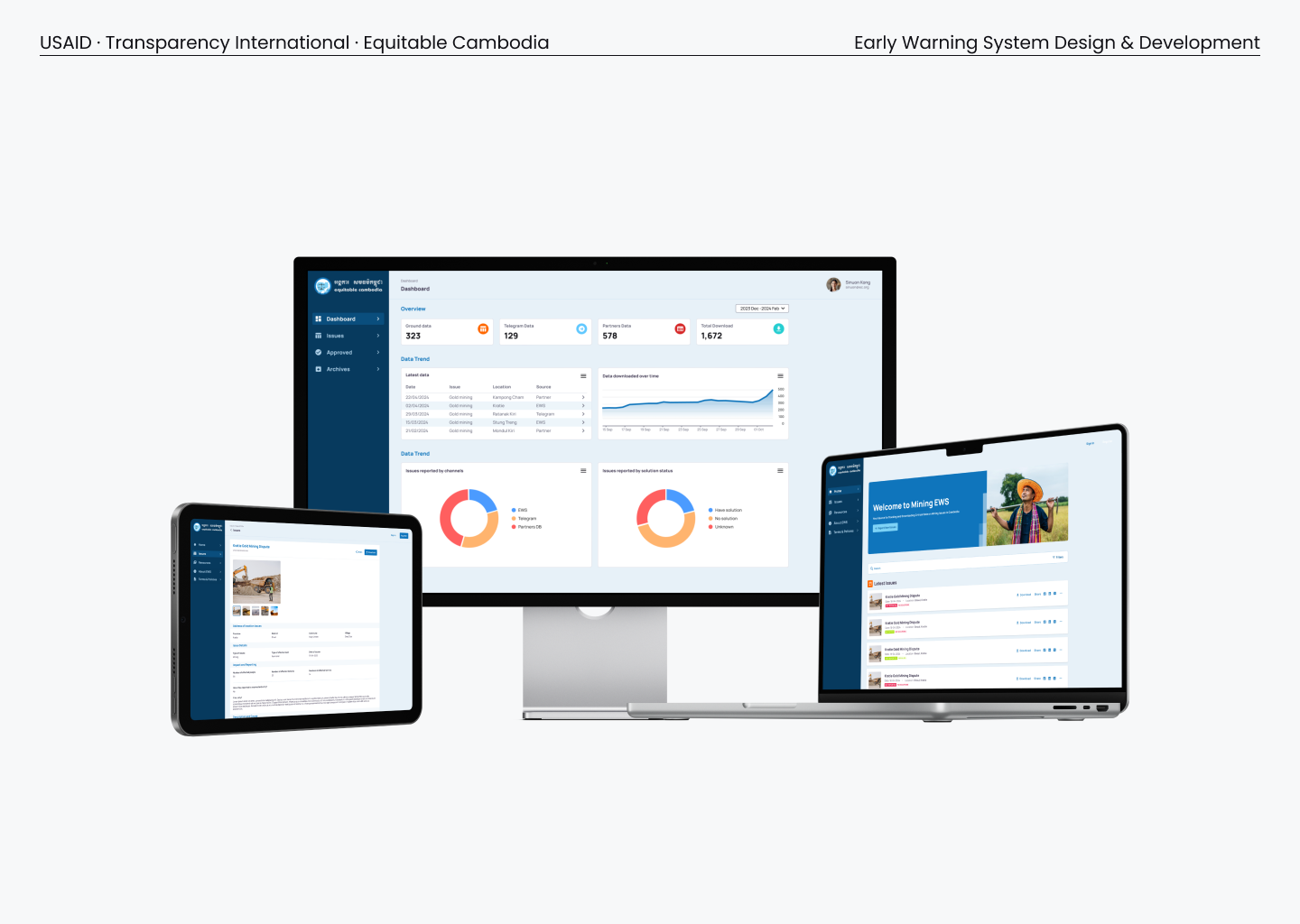 The dashboard Equitable Cambodia used to track concession records across the areas they monitor.
The last mile was a text message
We built the platform on Liferay so Equitable Cambodia could track all the concessions happening in the areas they monitor. What made it an early warning system was the delivery. We integrated it with the telecom networks so that people in those communities could sign up for SMS alerts and get a message when something was happening with mining near them.
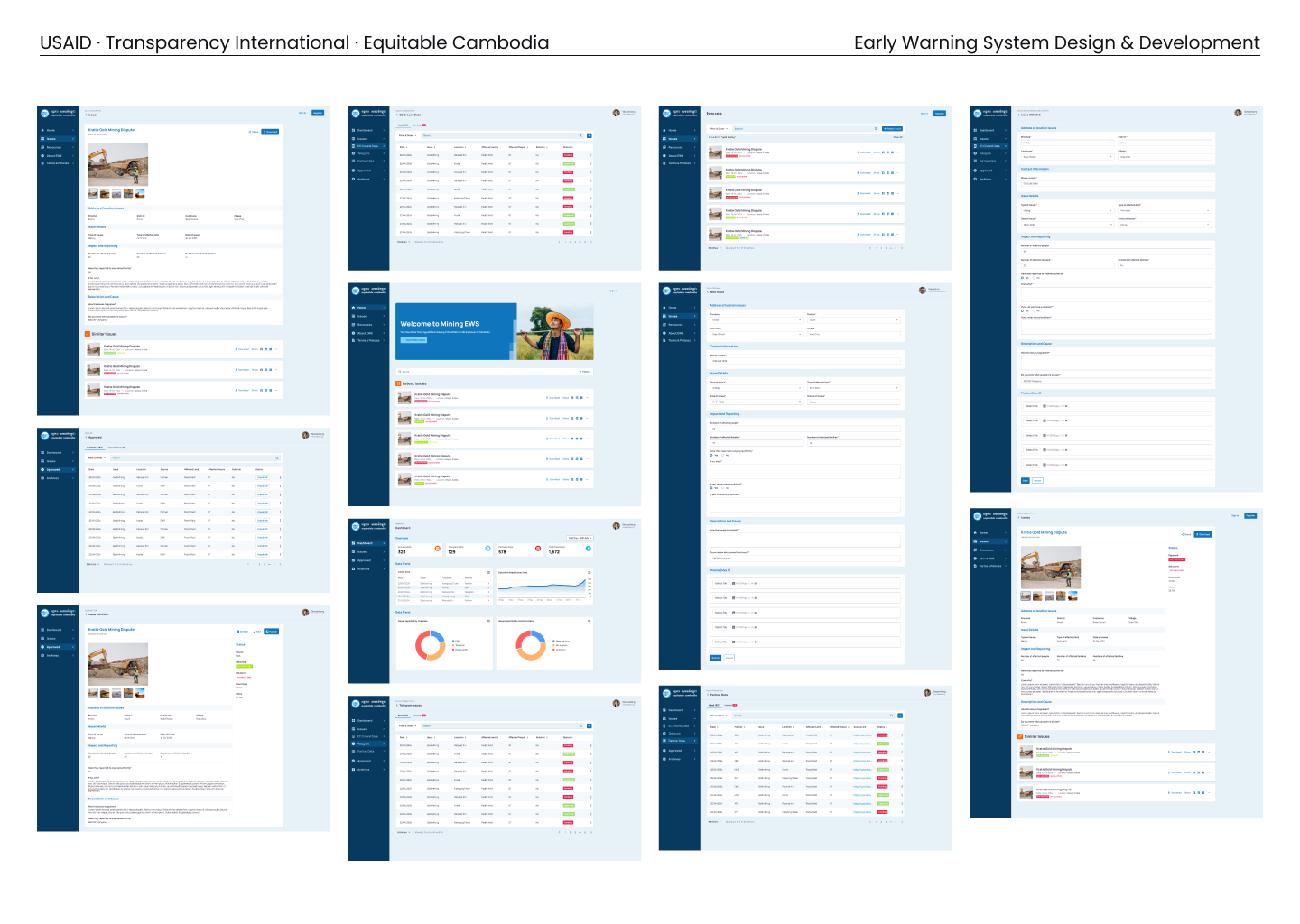 The full platform: records, data pulled from multiple sources, reporting forms and archives.
A community member near a mining site does not sit refreshing a website. But they carry a phone, and a text message finds them. The whole system was built around that fact. The data was already public. Our job was to carry it the last mile, from a government release to the hand of the person it was actually about.
Working on something like this?
Research, design or a good question. All welcome.