Alongsiders: an app for a 20-country mentoring movement
Tech-stack strategy, a low-resource Android data app in eight languages, and a Liferay platform with dashboards and certificates for a youth mentoring movement across 20 countries.
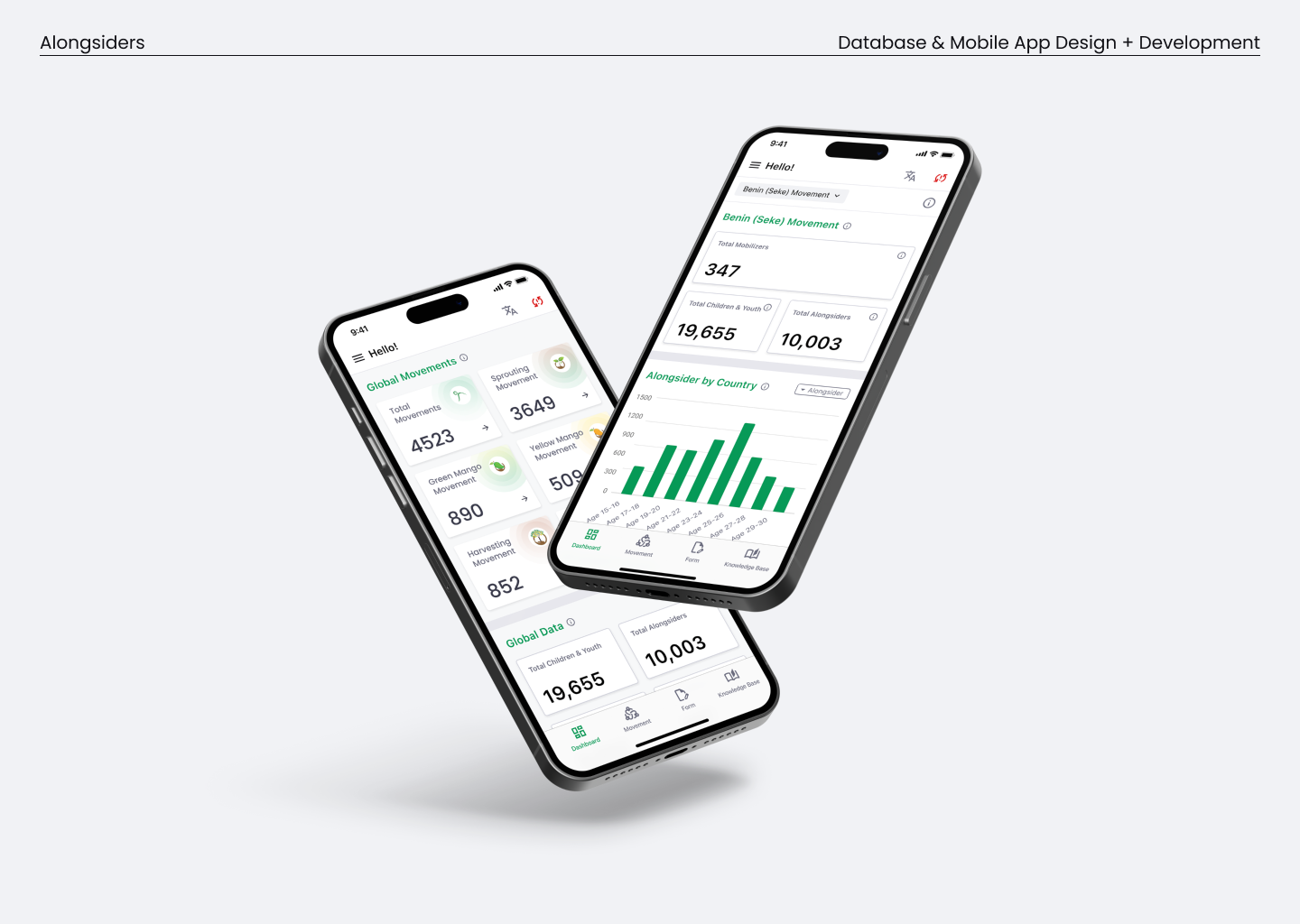
For almost five years I sat on both sides of this project.
I was Alongsiders' Director of Innovation from 2019 to 2024, and I was also the bridge to Glean, the team that built the technology. Alongsiders is a youth mentoring movement that started in Cambodia, where a young person walks alongside a younger boy or girl, a little brother or sister, through a big-brother, big-sister program. By the time I was there it had grown to over 40,000 young people across 20 countries. For a youth movement, technology mattered, and they wanted to use it well.
Off the spreadsheets
The first real problem was data. Country coordinators were tracking their young people in spreadsheets and emailing them in. We needed a tool that let a facilitator enter each participant's details and map them to their mentor, on the spot.
So we built a custom Android app designed for low-resource settings: older, slower, cheaper Android phones, the kind a facilitator in the field actually carries, supporting eight languages. The constraint set the design. If it didn't run on the cheapest phone in the room, it didn't matter how good it looked on mine.
The app facilitators used in the field: movement and country data, in eight languages, built to run on low-end Android.
The app I turned off
Alongsiders had launched a mobile app before I arrived, and part of my job was to be honest about it. It wasn't being used the way they'd hoped, and for the things it was meant to do, social media was simply serving them better. So we wound it down.
One system for the whole movement
With the field data flowing in, we worked with Glean to build a full platform on Liferay that tracked every young person across every movement. The home office and the country offices got dashboards: program status, growth over time, a real view of how the movement was spreading, instead of a stack of spreadsheets nobody could reconcile.
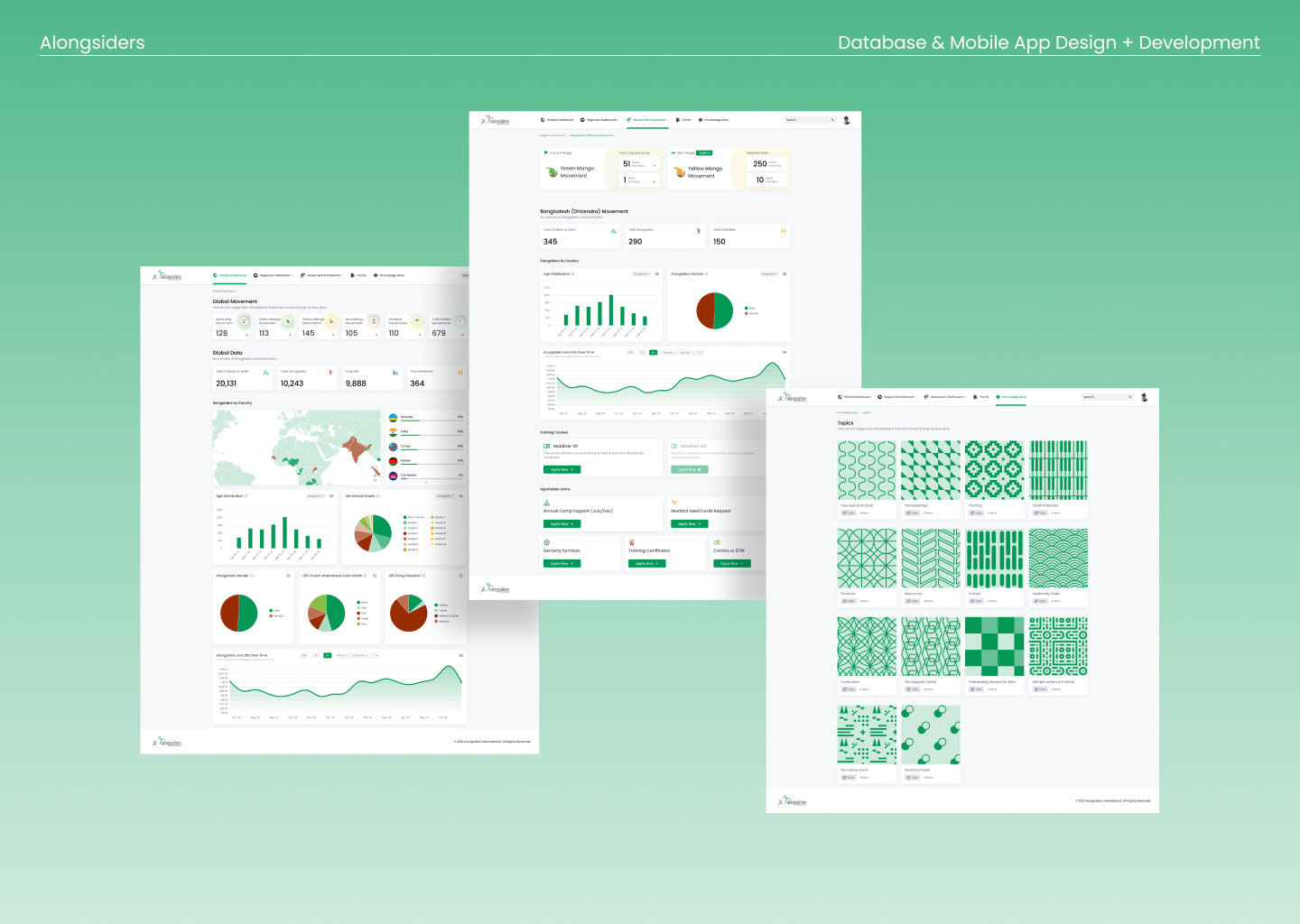 The web platform: a global view of the movement, country-level breakdowns, and the knowledge base of training modules.
It also handled graduation. Alongsiders issues certificates as young people move through the program, so we built the platform to capture the modules a person had completed, produce their certificate and track the whole graduation process so the movement had clean data on it.
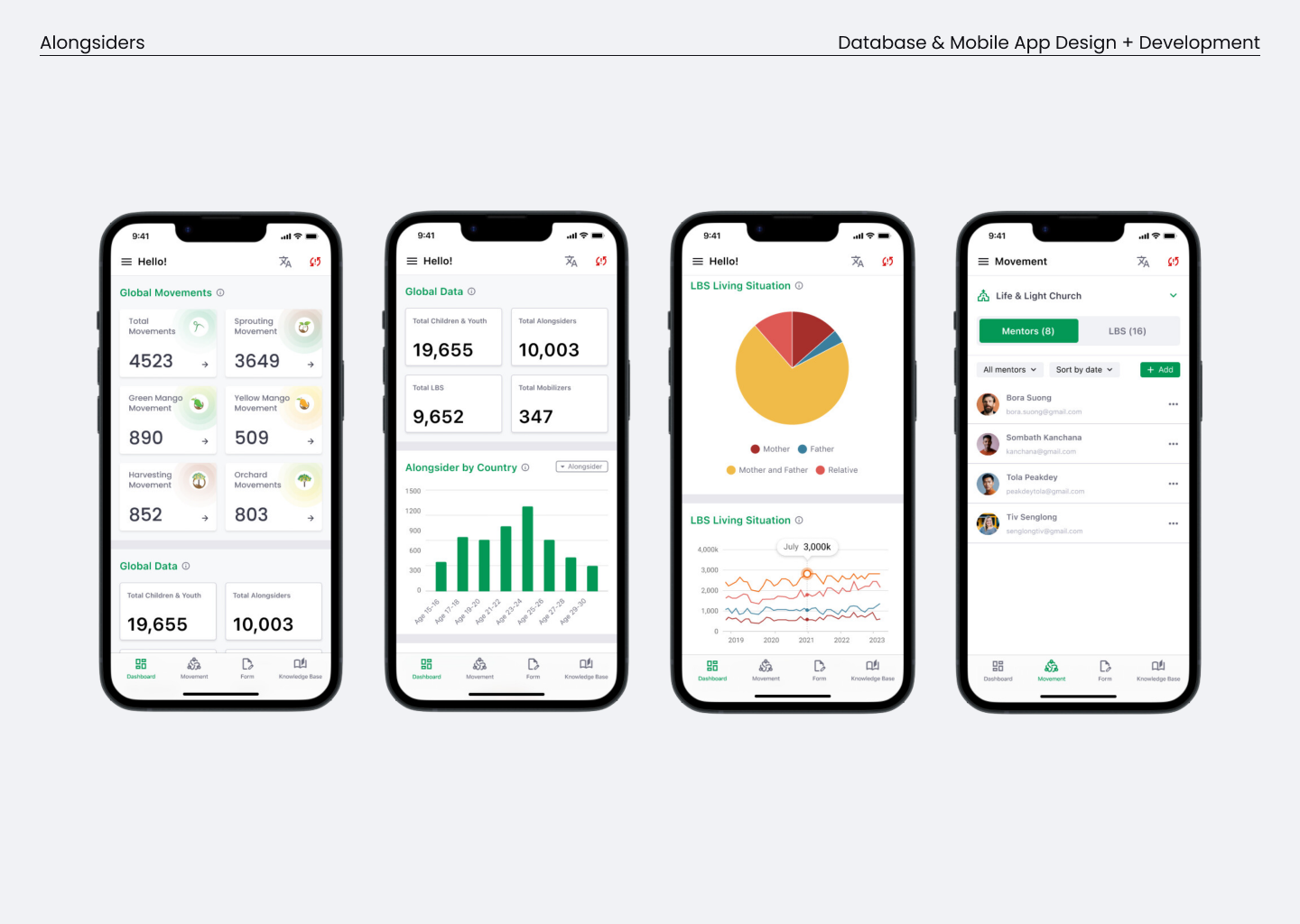 Inside a movement: participant data, and the mentors matched with their little brothers and sisters.
We also built a custom mobile app, native on Android and iOS, that connected into Liferay and pulled the same data, so the platform wasn't only a website. Wherever a coordinator worked, on a laptop in a country office or a cheap phone in the field, they were looking at one system, in their own language.
Working on something like this?
Research, design or a good question. All welcome.