Agrihouse: e-commerce that tracks its own impact
A mobile app and e-commerce prototype tracking the environmental and social impact of every product, from production to sale, so an ESG report builds itself.
This one started as a class assignment.
It was the final project for one of my master's courses, and I brought in a real client: Mekong Inclusive Ventures, a Phnom Penh impact venture run by a friend of mine. MIV builds businesses around self-employment for marginalized communities in Cambodia, including people living with disabilities, and they were launching a line of plastic-free, refillable cleaning supplies to cut down on single-use plastic. They wanted an e-commerce platform that did two things at once: sell the supplies, and show a business the environmental impact of buying them.
How might a shopping experience teach a business how its everyday purchasing affects the environment, and make buying better worth its while?
Twelve weeks, one client
I started where the product did, with people. I interviewed the two users who mattered most: the founder, to understand the business goals, and a procurement manager, the person who actually orders office supplies and mostly wants it fast, cheap and from someone they trust. I recorded and transcribed the conversations, built an affinity map, and boiled it down to one problem statement: a simple way to order supplies that are good for the environment. Alongside that I read up on the environmental cost of e-commerce itself, the packaging, the boxes, the delivery emissions, so the platform wouldn't quietly undo the good it was meant to sell.
The concept that came out of it was an impact tracker: a counter on every product showing what buying it actually did, in MIV's case, how much single-use plastic it kept out of the bin. I wanted that number to earn its place, so I tied it to savings. The larger a business's positive impact, the more it saved, with points, badges and a green-certification status it could show on its own site.
Then I worked it out on paper before Figma: a design studio of six one-minute sketches, then wireframes of the product page and the tracker. I looked at who was already doing this well, like Made Free, whose product pages carry a "Days of Freedom" metric that shows the human impact behind each purchase.
I ran a card sort to see how people expected the content to group, ingredients, features, payment, environmental impact, and used it to design a faceted navigation so a buyer could filter products by what mattered to them, including how much plastic each one saved. Then I reworked the onboarding so that signing up also taught you why any of this mattered.
From a concept to something you could tap
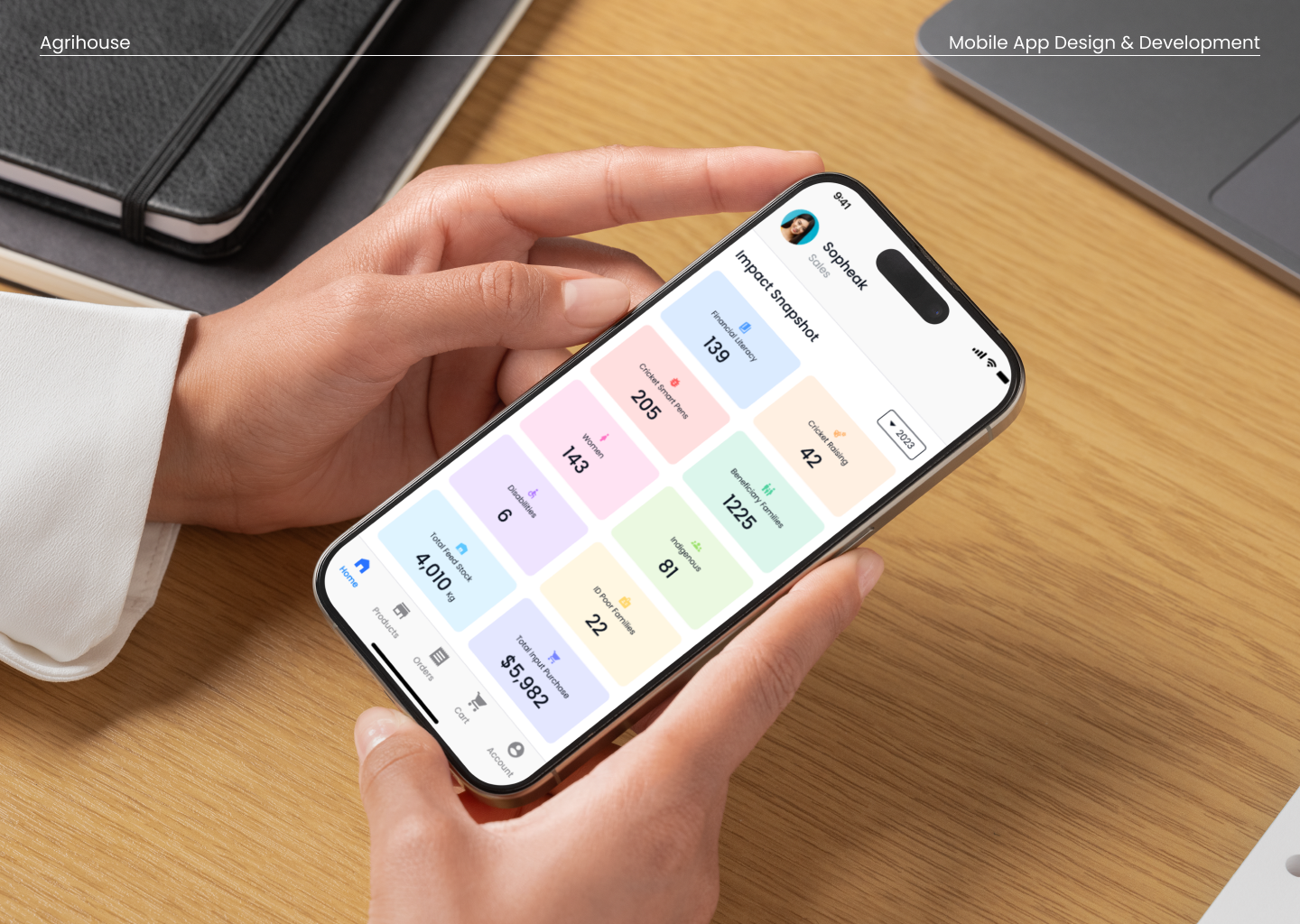
That research became the foundation for AgriHouse. Working with the MIV team and our mobile team at Glean, the impact tracker grew into a fuller e-commerce platform: a seller could manage their stores, list a catalog, take orders and see their impact in one place. The home screen was an Impact Snapshot, the environmental and social numbers sitting right next to the sales, so the sustainability reporting a business usually scrambles for once a year was just there.
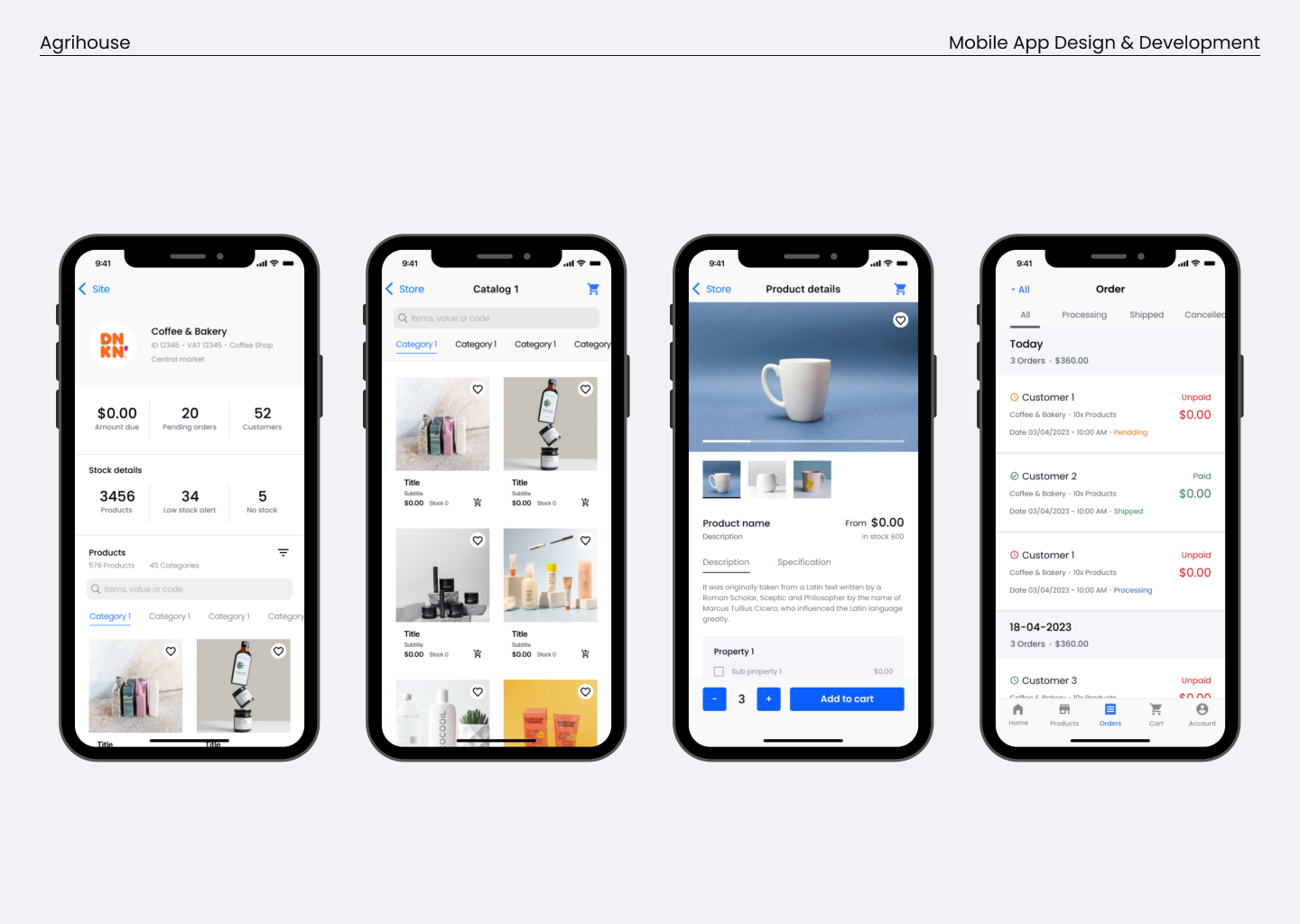 A normal e-commerce flow, store, catalog, product, orders, with impact tracked underneath it.
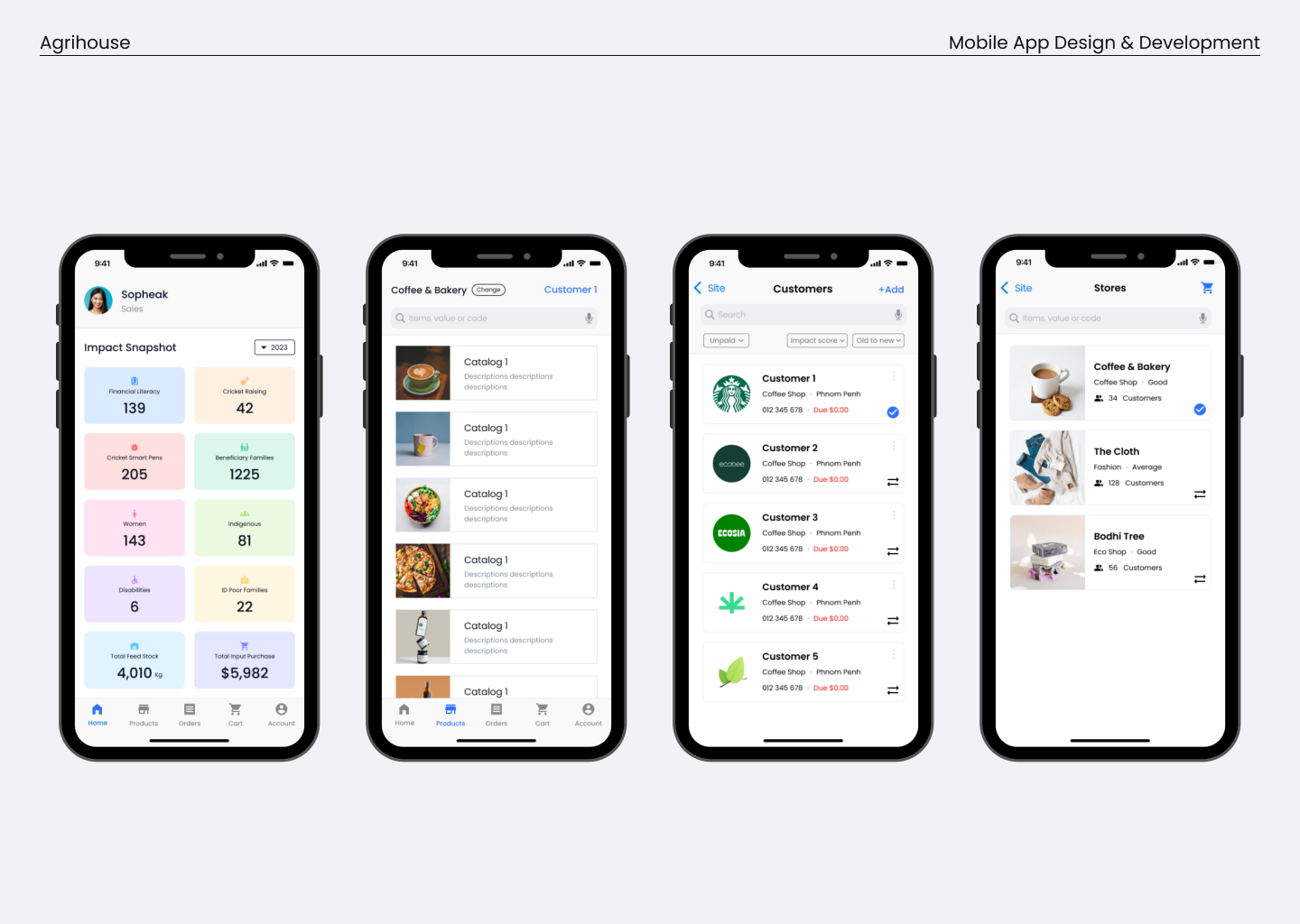 Impact and commerce in the same app: the snapshot, the catalog, customers and stores.
We built the functional prototype on Liferay, using its e-commerce system so people could actually buy products, with the environmental impact tracked across the platform as they did. Sustainability reporting fails when it lives apart from the work. If the impact number is a byproduct of the sale you already made, someone might actually look at it.
Working on something like this?
Research, design or a good question. All welcome.