The ACCI Missions & Relief website
Website development for ACCI Missions & Relief: payment integrations and a searchable directory of field workers and projects.

ACCI Missions & Relief runs projects all over the world. They're an Australian Christian missions and relief organization, and they came to us wanting to get more out of their website: to show the work they do, and to give supporters an easy way to find and back the specific field workers and projects in the countries where they work.
This one was a build. ACCI's own designer provided the design. We were the technology implementers, and I was hands-on in the code.
What they needed it to do
Giving had to be smooth, and supporters had to be able to find the person or project they cared about. ACCI's model is personal. Supporters back named field workers, real people living and working in communities around the world. A generic website flattens that. The site had to keep it.
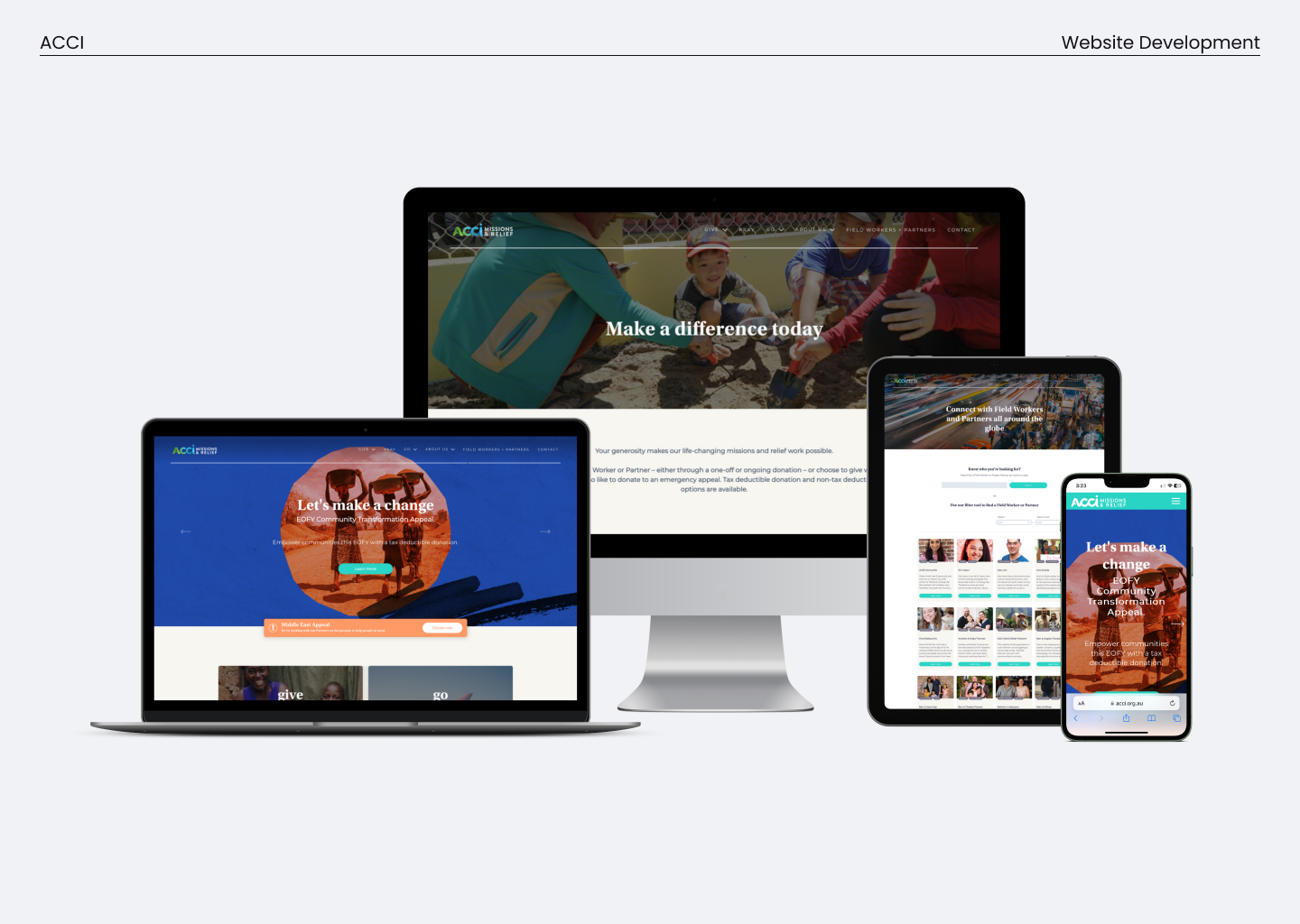 Built to work across devices, from a supporter's desktop to their phone.
What we built
We built the site on Liferay and wrote a set of custom integrations to make the giving work the way ACCI expected, with the payment flows matching their process rather than forcing them onto ours. The bigger piece of custom work was the directory: an easy-to-search index of ACCI's projects and people, with a filter tool so a supporter could narrow down to the field worker or project they wanted and give directly.
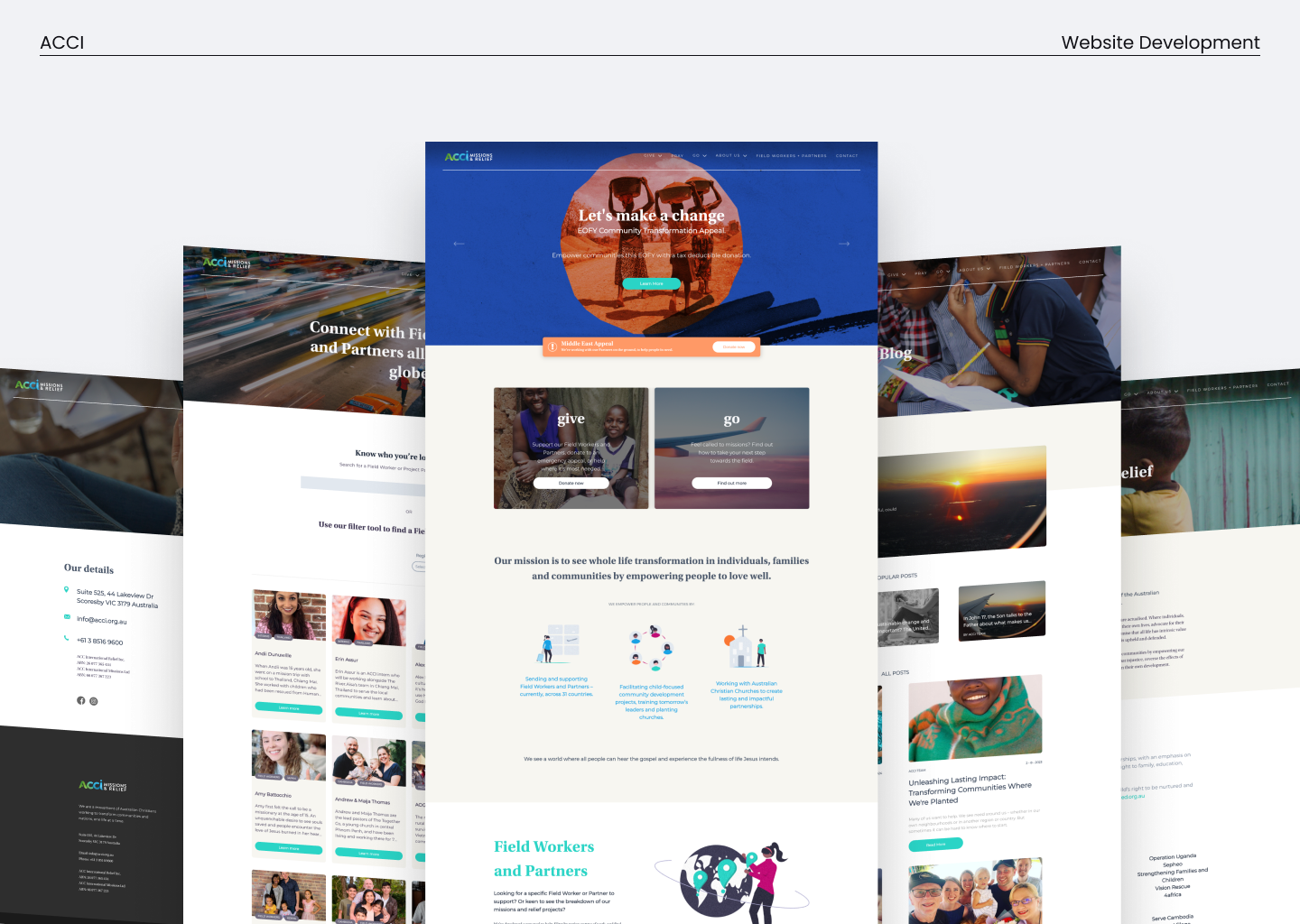 The field-worker and partner directory, with a filter tool so a supporter could find and back a specific person.
The design belonged to ACCI. What we owned was whether it actually worked: whether a payment went through cleanly, and whether someone who wanted to support one particular field worker could find them in a few clicks and do it.
Working on something like this?
Research, design or a good question. All welcome.